Employee’s exposure to hazardous substances
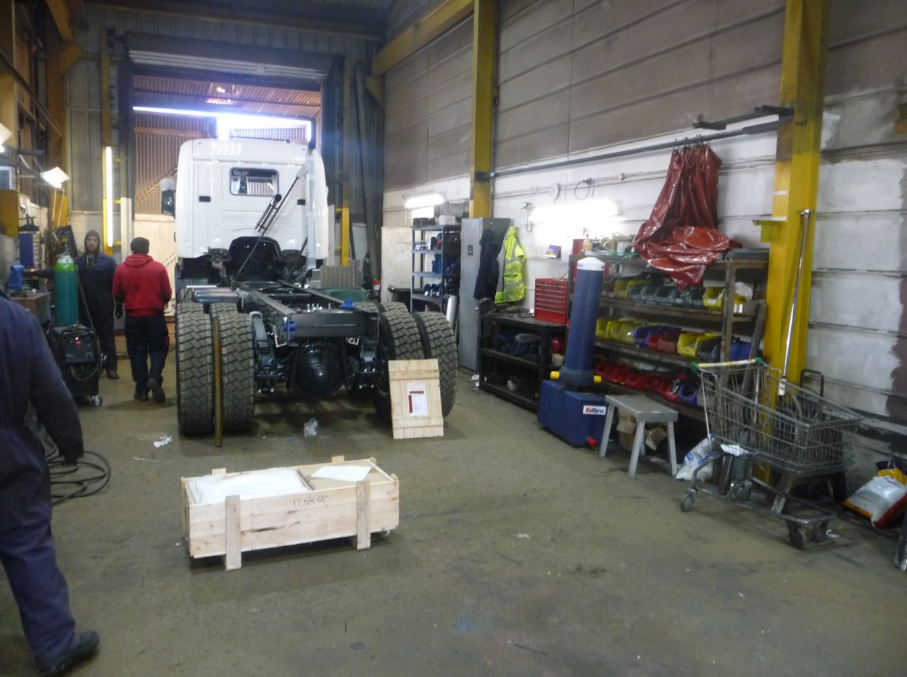
Today we were in Peterborough where our client asked us to carry out an assessment of occupational exposure to hazardous substances. Our main objectives of the assessment are; to measure the concentration of inhalable dust within the working environment, to measure the concentration of welding fumes within the working environment, to establish the daily personal exposure of the employees at risk and finally to be able to advise on suitable risk control for the future.

How we calculate the daily personal exposure to employees
In order to calculate the daily personal exposure to the employees our surveyor had to take samples of airborne particulates. These airborne particulates were collected using Cassella Vortex and Ipex personal sampling pumps which were fitted with 5-hole samplers. The samplers were positioned in the breathing zone of each operative outside the respiratory protective equipment. Sampling flow rates had to be calibrated prior to and after sampling using an FM 2 (0.3-3.0l/min) working flow meter. Sampling for welding fumes were also collected, at the flow rate of 2L/min and onto 25mm QMA filters.
What did air monitoring reveal?
The results of air monitoring suggested that the welding operatives are unlikely to be exposed to levels of Chromium, Hexavalent Chromium, Manganese and Copper fumes above the recommended workplace exposure limits. Although this was not the case in regards to dust as air monitoring suggested that the employees are likely to be exposed to levels of inhalable and aluminium dust above the recommended workplace exposure limits. However if employees are using the respiratory protective equipment provided then this will prevent them being exposed to welding fumes and dusts above the workplace exposure limits.

How to minimise occupational exposure to hazardous substances
Based on the results of air monitoring our surveyor was able to recommend the most suitable remediation measures for our client in order to minimise his employees’ exposure to hazardous substances. As discussed above, it is recommended that employees wear the respiratory protective equipment supplied as it is proven to prevent them being exposed to levels of welding fumes and dusts above the recommended limit. Therefore it is the employers responsibility to enforce this and ensure that employees are using equipment effectively. This comes hand in hand with adequate training being provided. Employees should be trained on health risks from hazardous substances in the workplace, control measures, their use and maintenance. Refresher training should be provided at least once a year.
Welding Fumes
Welding processes are sectioned into two groups, one being fusion welding which is standalone heat, and the second group is pressure welding which uses heat and pressure. Fusion welding involves an electric arc, gas, and thermal. These forms of welding product visible smoke which contains a hazardous metal fume. Welding fumes contain numerous metals such as aluminum, beryllium, lead, arsenic, and manganese. Numerous gases are also produced during welding such as Nitrogen, carbon dioxide, hydrogen fluride, and argon.

Welding fumes can create serious health effects for workers if the correct PPE is not used from inhaling. Short term exposure can result in the following;
- Nausea
- Dizziness
- Eye, nose, throat irritation
Prolonged exposure to welding fumes can cause;
- Lung cancer
- Throat cancer
- Nervous system and kidney damage
To reduce the exposure level to welding fumes and gases, you can clean welding surfaces regularly to remove any coatings that could potentially result in toxic exposure levels. Stay upwind of welding fumes when working in open areas. Use adequate local exhaust ventilation systems for indoor welding. Finally always use the correct PPE and RPE.

Sysco Environmental can assist in your companies compliance with the COSHH regulations through undertaking air monitoring surveys to measure the personal exposures of your welding and hot cutting process operators to welding fumes.
The assessment consists of the evaluation of
- Exposure times, working patterns and exposure groups
- Existing fume controls such as LEV and RPE
- Consumables, materials, and welding techniques
As well as personal sampling and preparation of a full in-depth technical report with findings and recommendations on how to lower exposure levels. For more information contact Sysco today for a free quotation.