
Employees working in a London office were concern about appearance of strange black deposits on the windows and walls around the windows. This combined with the fact that part of the offices were affected by water leaks and damage to the decorative finishes has led to a suspicion that mould may be developing inside of the offices.
The building in question was a 7 storey inner city building with a restaurant on the ground floor and offices on the remaining floors. The affected offices are located on the first floor of the building and consist of four offices, reception area, meeting room and a kitchenette. The offices large metal frame windows, plasterboard and block partition walls, plastered block perimeter walls and modern suspended ceiling tiles. None of the occupants was suffering with ill health symptom which could be related to the building.
I have conducted a premises inspection and indoor air quality investigation with the purpose to identify the origin and nature of the black deposits and to evaluate the level of mould contamination. The measurements of carbon dioxide (CO2) during the working day showed only a marginal increase of CO2 in the offices in the comparison with the outside atmosphere. The concentration of CO2 gas in the offices ranged between 496 ppm and 612 ppm. The background concentration of CO2 gas was 434 ppm. The ambient temperature in the offices ranged between 20.3 and 22.7 degrees centigrade and relative humidity ranged between 31.7 % and 40.1 %.
I have collected a number of surface samples from the black deposits for microscopic identification as well as a number of air samples for total spore burden evaluation.

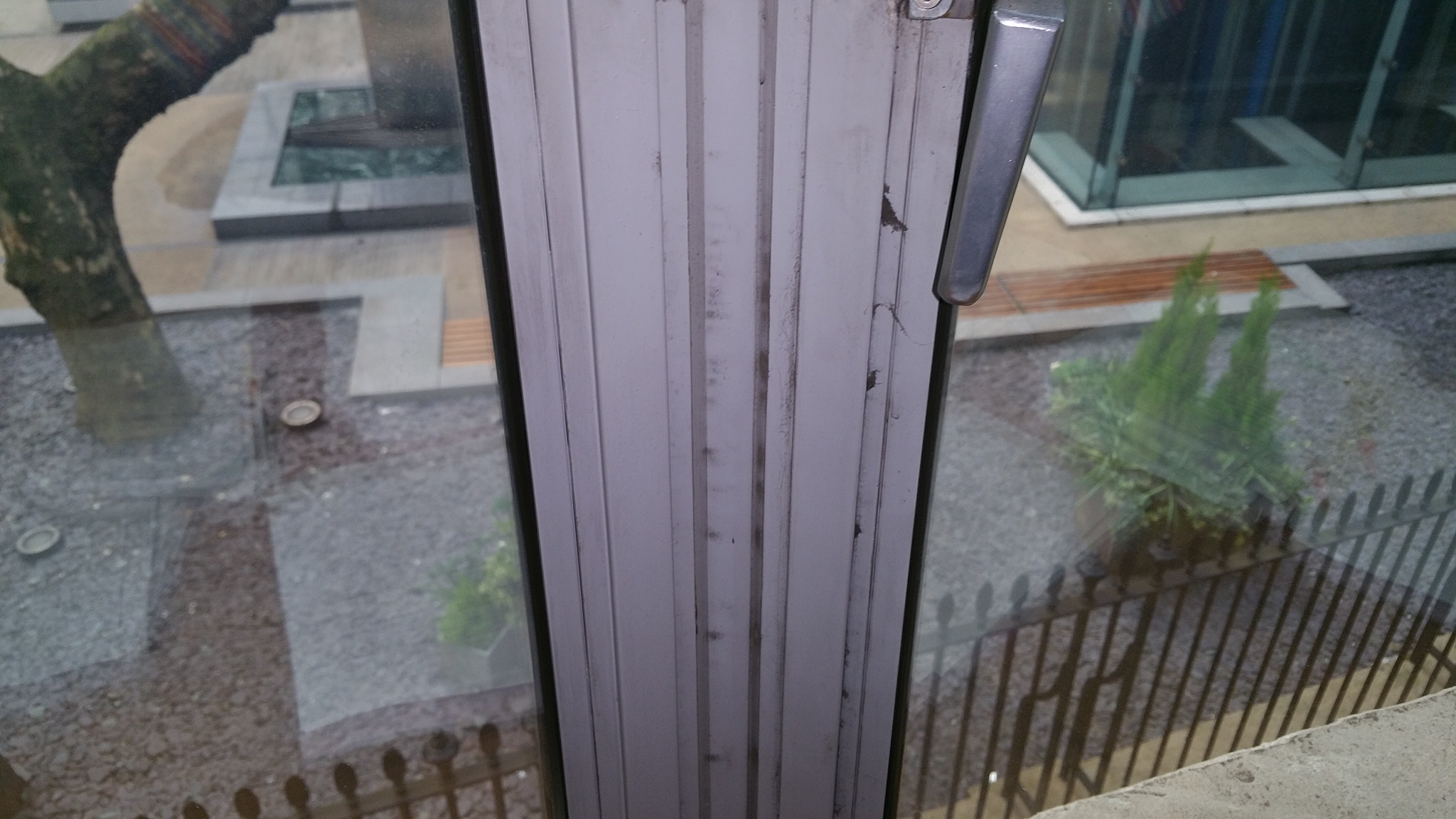
The mould spore samples showed that the concentration of airborne mould spores in the indoor areas was lower in comparison to the environmental background. The overall concentration of mould spores indoors ranged between 14 and 97 count per cubic meter. The average background concentration of mould spores in the atmosphere at the time of the assessment was 680 count per cubic meter. The mould spore trap samples collected in the offices were dominated by basidiospores and undifferentiated ascospores. Similar distribution of mould genera was observed in the environmental background samples.
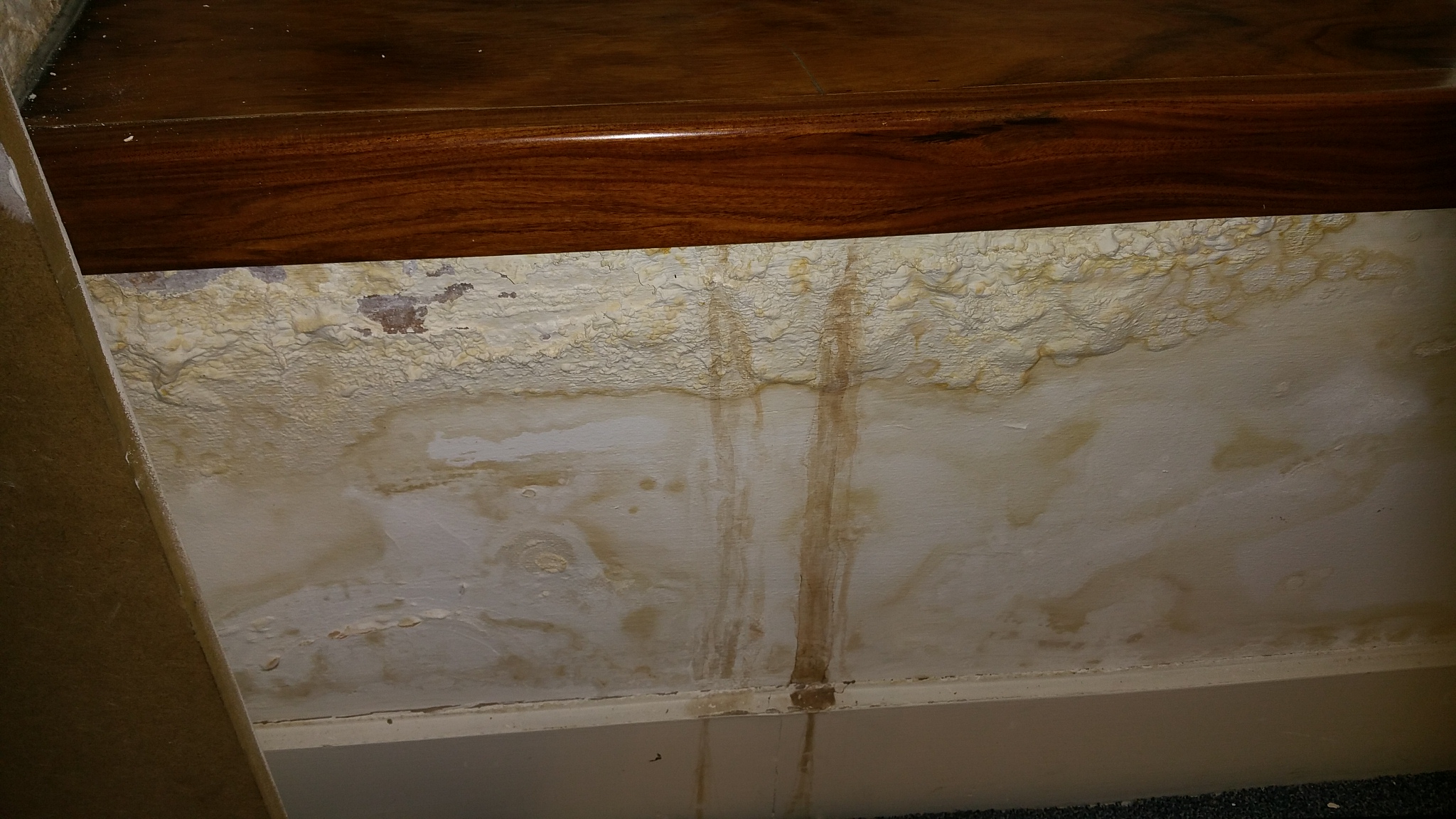
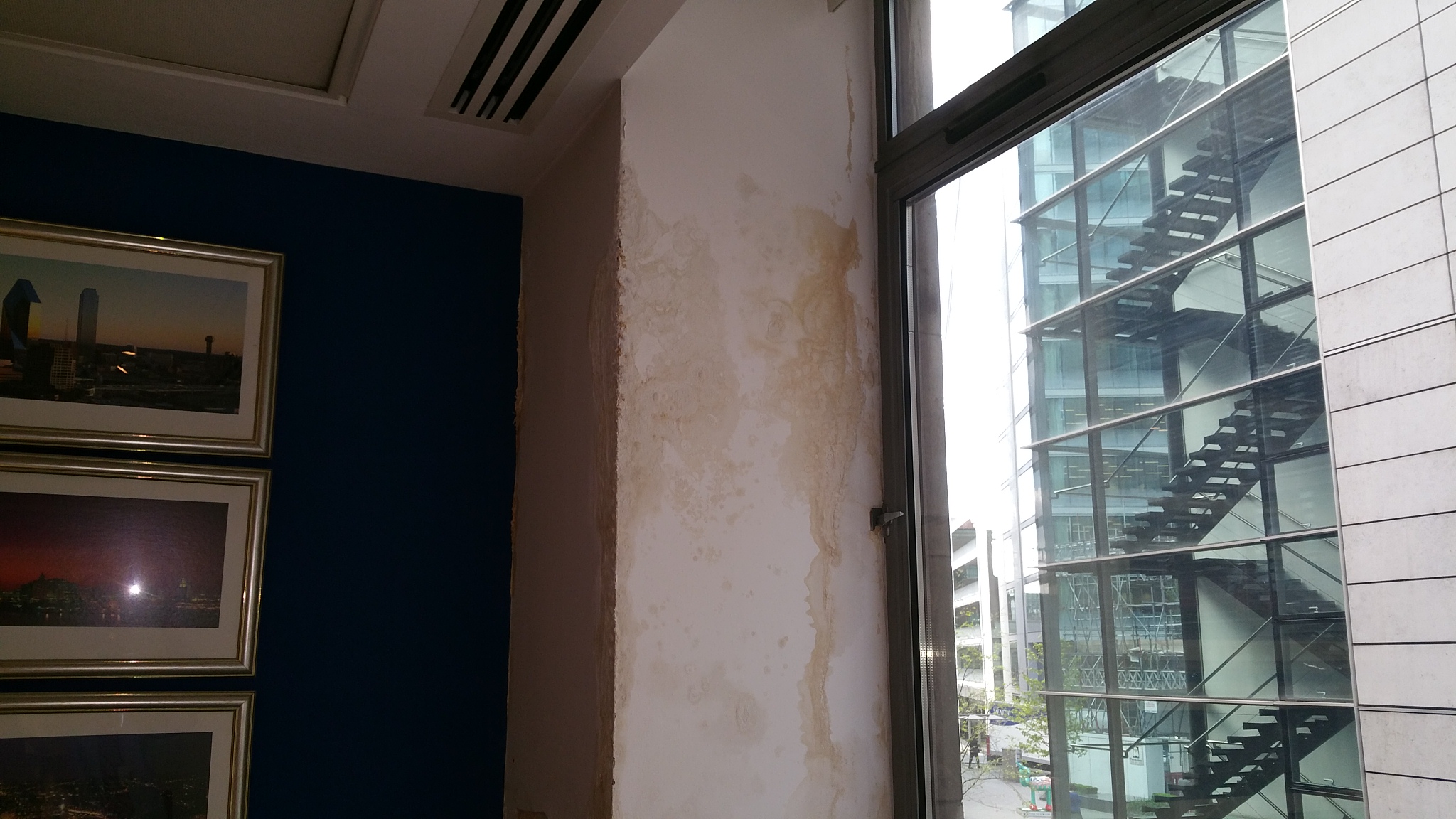
During the office inspection I have also identified penetrating damp to one of the office windows which most likely originated on the upper floor. The corner of the room including window frame and wooden window sills were affected by elevated moisture content. The wall showed signs of water damage, paint flaking and efflorescence. I have not observed any mould growth on the wall itself or wooden windows sill.
The patches of black discoloration on the window frames and wall in close proximity to window frames in are caused by accumulation of environmental dust. The outside air passes through gaps in the window frame seals and deposits particles and debris which over time form dark patches. The dust mainly consist from large particle agglomerates most likely from traffic, fibres, mineral particles and small amount of mould spores. No active mould growth as observed in the collected samples.
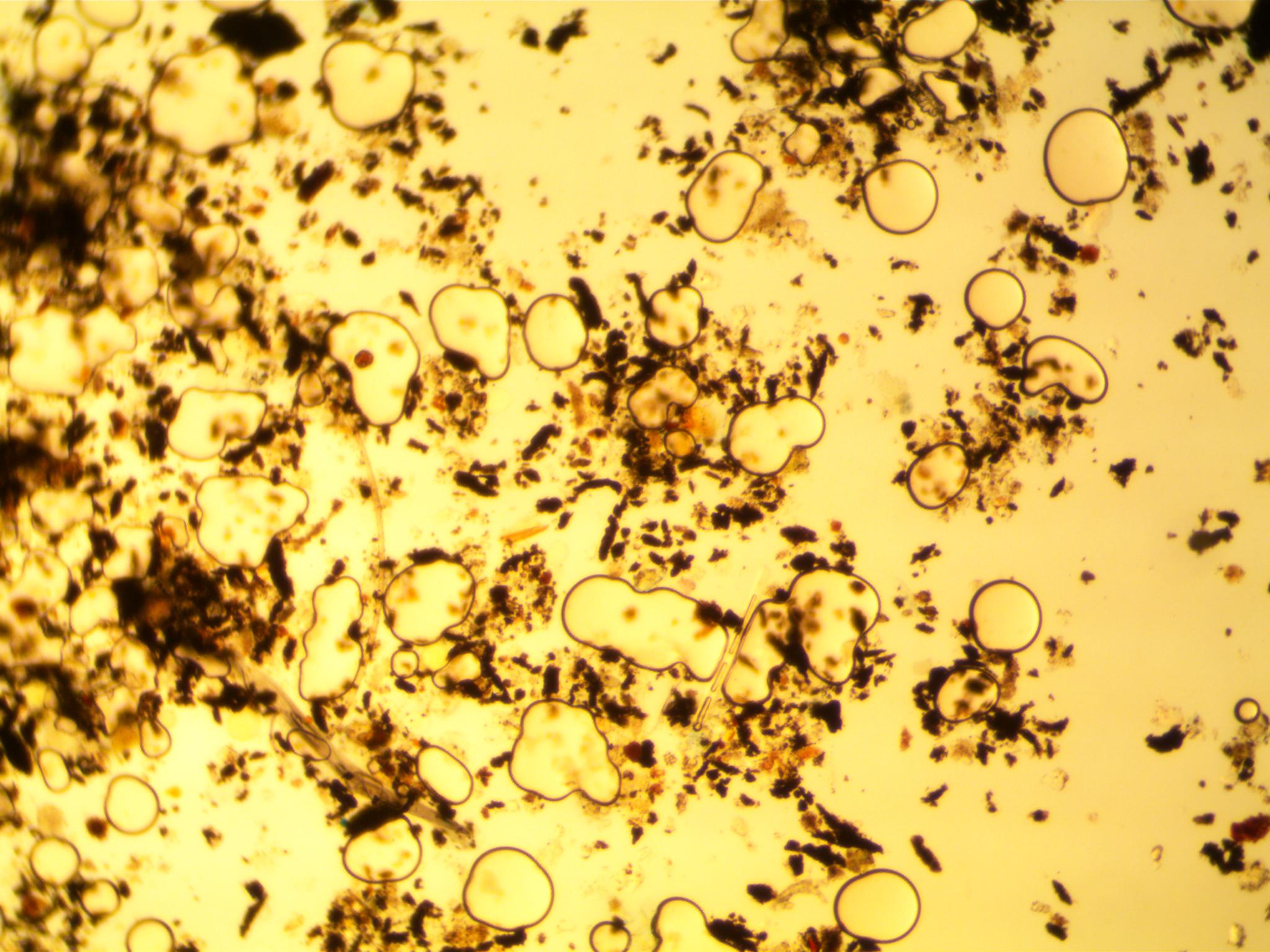

Based on the results of moisture mapping, visual observation and microbiological sampling and identification it is our opinion that the indoor air quality in the offices is good and not contaminated by mould spores. The discoloration on window frames and on wall in not of mould origin and dos not represent a risk to health
