
My recent investigation into indoor air quality problems has lead me to a very nice residential property. The family living in this rented property have been experiencing respiratory problems since they moved into the property some 6 months before. Particularly affected were two young children who were suffering with severe respiratory irritation to the point that they had to be admitted into hospital for observation.
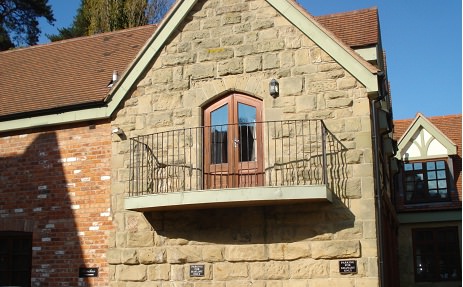
Residential property with hidden mould problem
Investigation of this case has started as usual with detail discussion with the occupants covering the history of their symptoms and also the building history and construction details. On the first glance the building did not suffer from any immediately obvious faults apart from some minor historic leaks in the bathroom area.
During visual investigation of the house I could not find any obvious signs of mould contamination which would explain their severe respiratory problems. Investigation of the building external areas has however lead to discovery of the minor leak to lead guttering.
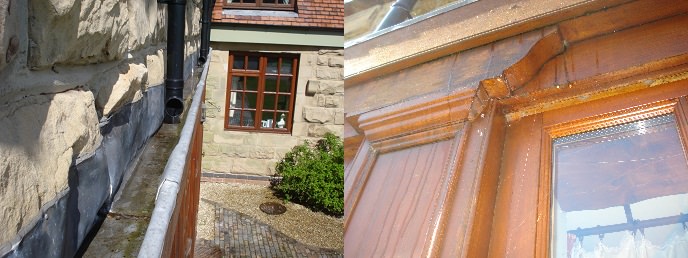
Leaking lead guttering
The family thought that because the leak was only a minor one and confined visually only to the external of the building they did not consider it important. As the investigation later showed the water damage from this leak and possibly other one was much more extensive.
Once the potential source of water ingress into the house was identified the discovery of other damage areas quickly followed. I have found a wet wall area in the house corridor with absolutely no signs of water damage, but moisture mapping showed that the wall was completely saturated with water.

Water saturated wall with no sign of damage of mould
When I lifted the upstairs carpeting I could see the water staining of the floorboard underneath. This was apparently one of the historic minor leaks into the property. When I had a look under the floorboard I could that the damage was a bit more extensive and white wood decaying mycelium was visible on the underside of the floorboards.
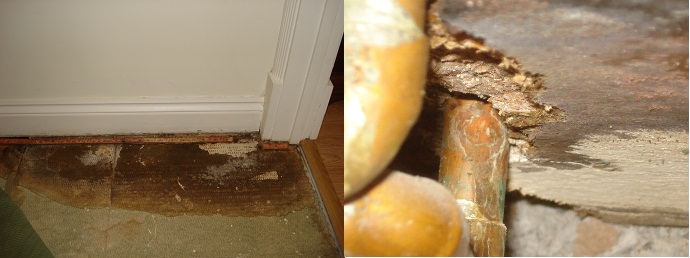
Hidden mould and fungal rot under the floor boards
The minor gutter leak has turned out to be a cause of major water damage to the property. The leaking gutter has saturated the floor cavity with water and has lead to expansion of the supporting timber structure. This expansion could be most noticeably observed in the bedroom where different areas of the wooded flooring were slightly uplifted. It was something that the occupant considered normal because it happened very slowly and they just accepted it as normal.
Once the problem has been identified I went on to evaluate the contamination level of the indoor air. I have taken several samples for mould identification. Generally speaking the indoor culturable mould counts were some 2000% higher that the representative outdoor ones. On top of this very high count several pathogenic species have been detected. We have identified the presence of large number of spores of Aspergillus fumigatus and Aspergillus Ustus which are both directly linked to diseases such as aspergillosis and hypersensitivity pneumonitis. The presence of significant concentration of aspergillus toxic mould explained the severe respiratory irritation of the children.
Following the investigation the family has promptly moved out of the property and the affected children are undergoing treatment
By Tomas Gabor


