
Industrial manufacturing of delicate components is often done under controlled conditions to minimise the impact of the outside environment or to prevent intrusion of foreign contaminants. The control measures can range for simple air filtration to fully enclosed environmental chambers with controlled humidity, temperature and atmosphere composition. How much the production environment needs to be controlled depends on the sensitivity of the manufacturing instrumentation, reactivity of individual components or coatings.
I have recently visited a manufacturer of delicate hearing aids who was having problems with small granular defects on the final products. These defects could be described as small, barely visible, nodules on the surfaces of the finished product. Because the earpieces are worn in ears for long periods of time these sharp nodules would caused discomfort to the wearer and were therefore unacceptable. The company management suspected air contamination as the most likely cause of the defects but were not sure if the contamination originates internally or is carried in from the outside environment. I have been appointed to carry out a full scale site investigation of the indoor air quality in order to identify potential sources of contaminants, whether internal or external, identify the contaminants causing the defects in final products and advise on the most appropriate solution.
During the initial inspection of the factory I have identified several sources of particle and fibre contaminates. Among the many identified the most significant were the abrasive and polishing operations involving the use of sand paper and polishing fibrous wheels on rotary tools, internal furnishings and ceiling insulation and external contaminants carried in by the air management system.
At the beginning of the investigation I have collected samples of the dust accumulated on the surfaces in order to identify its components. Detail identification of the settled dust and subsequent comparison with potential sources of contaminants was essential in tracking the source.
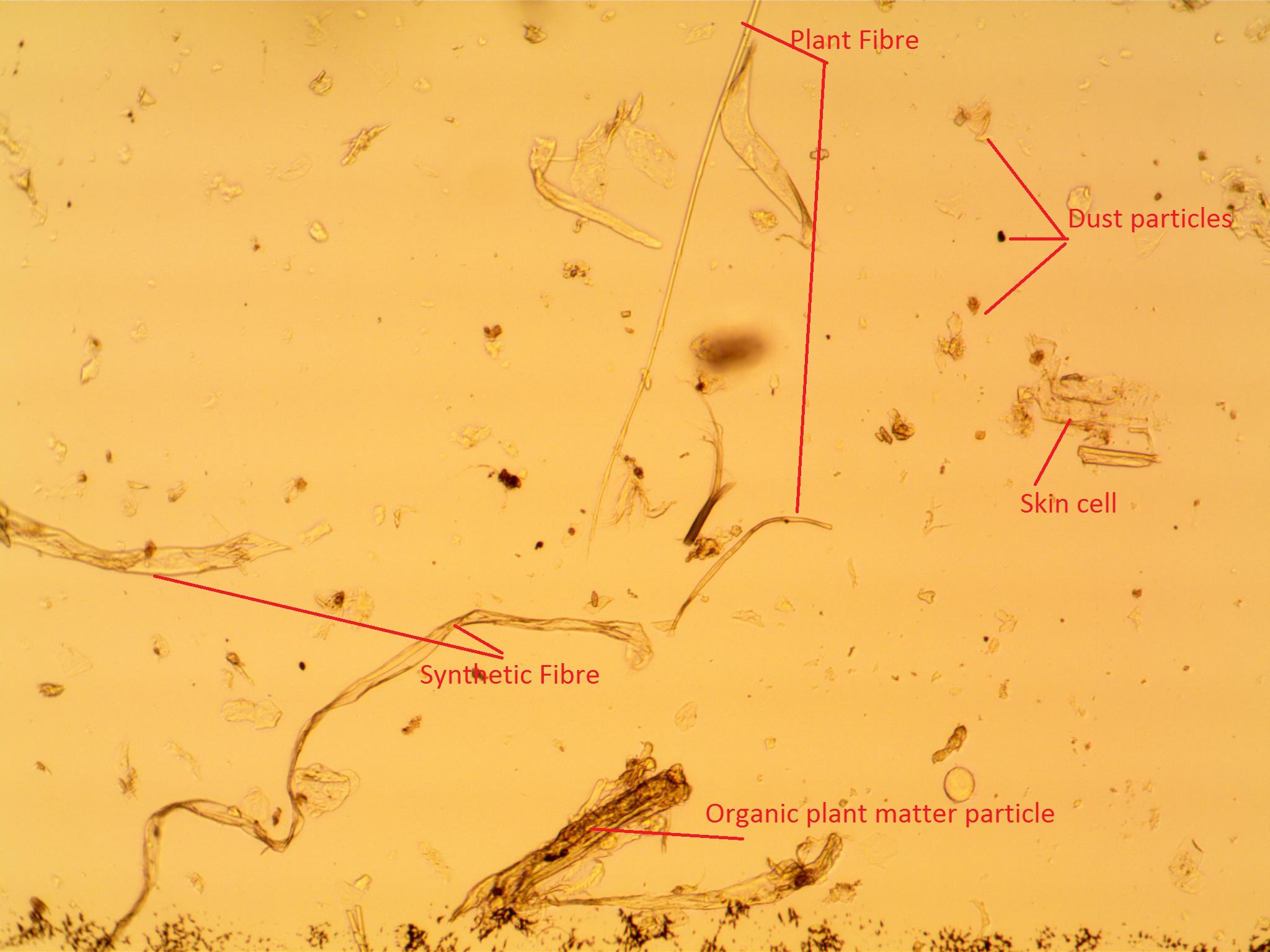
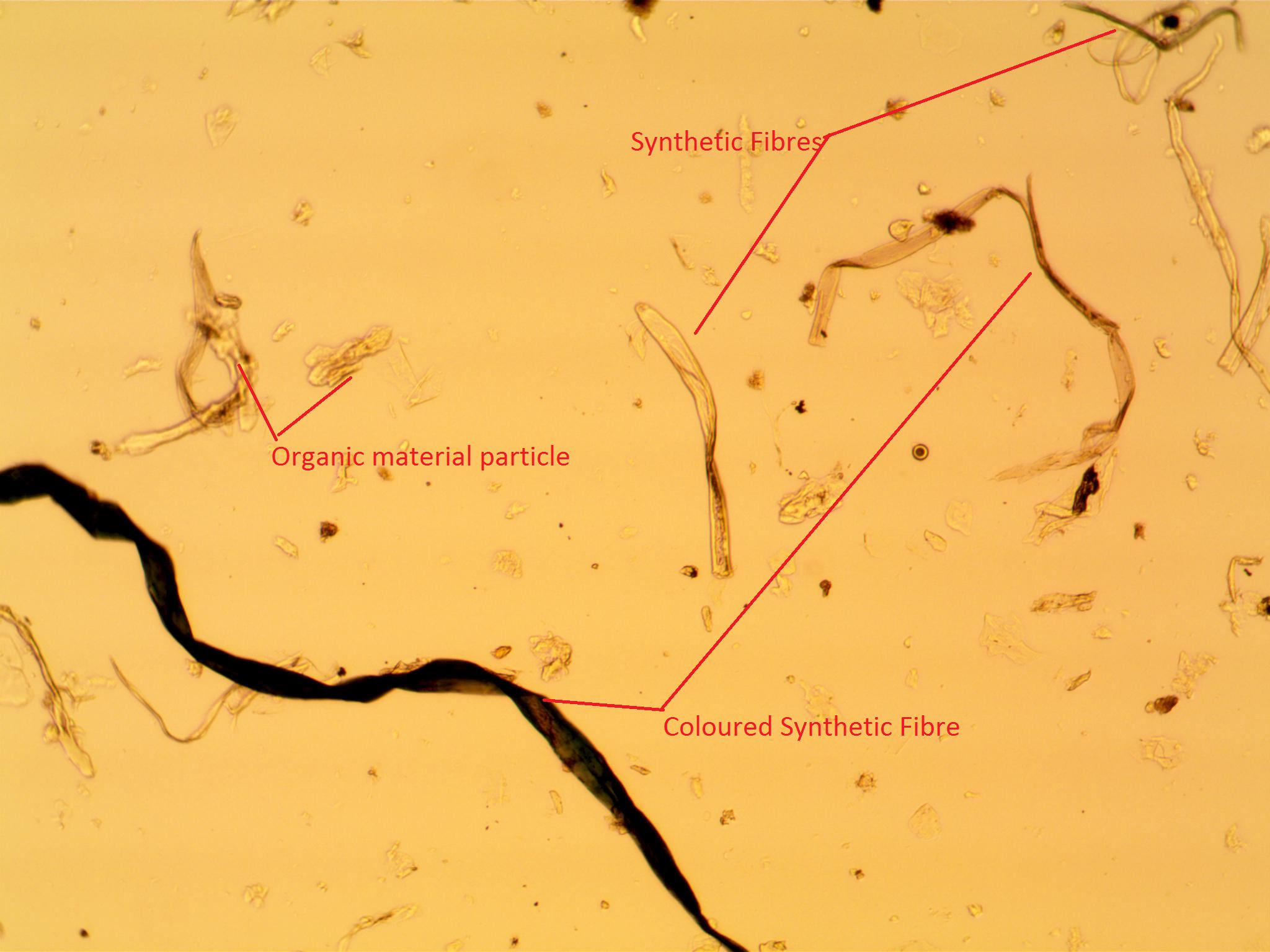

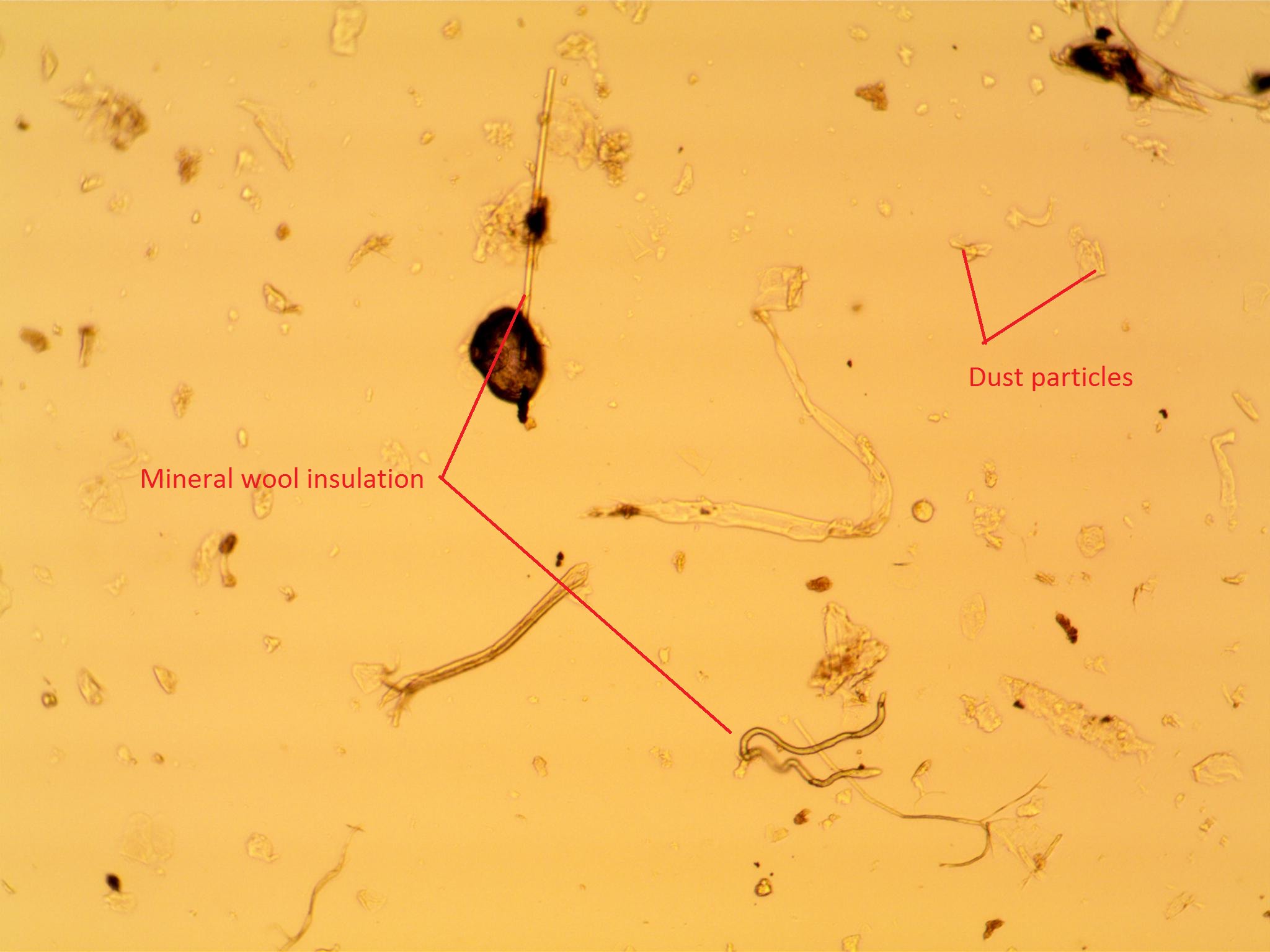
Microscopic examination of the dust showed that the main component of the dust were long synthetic fibres, straight mineral wool insulation fibres, large organic particles of plat origin, skin cells and smaller proportion of mineral dust.
In the next stage I have collected dust samples from all suspected sources and carried out a detailed microscopic evaluation of the material and it potential to contaminate the product during the manufacture.
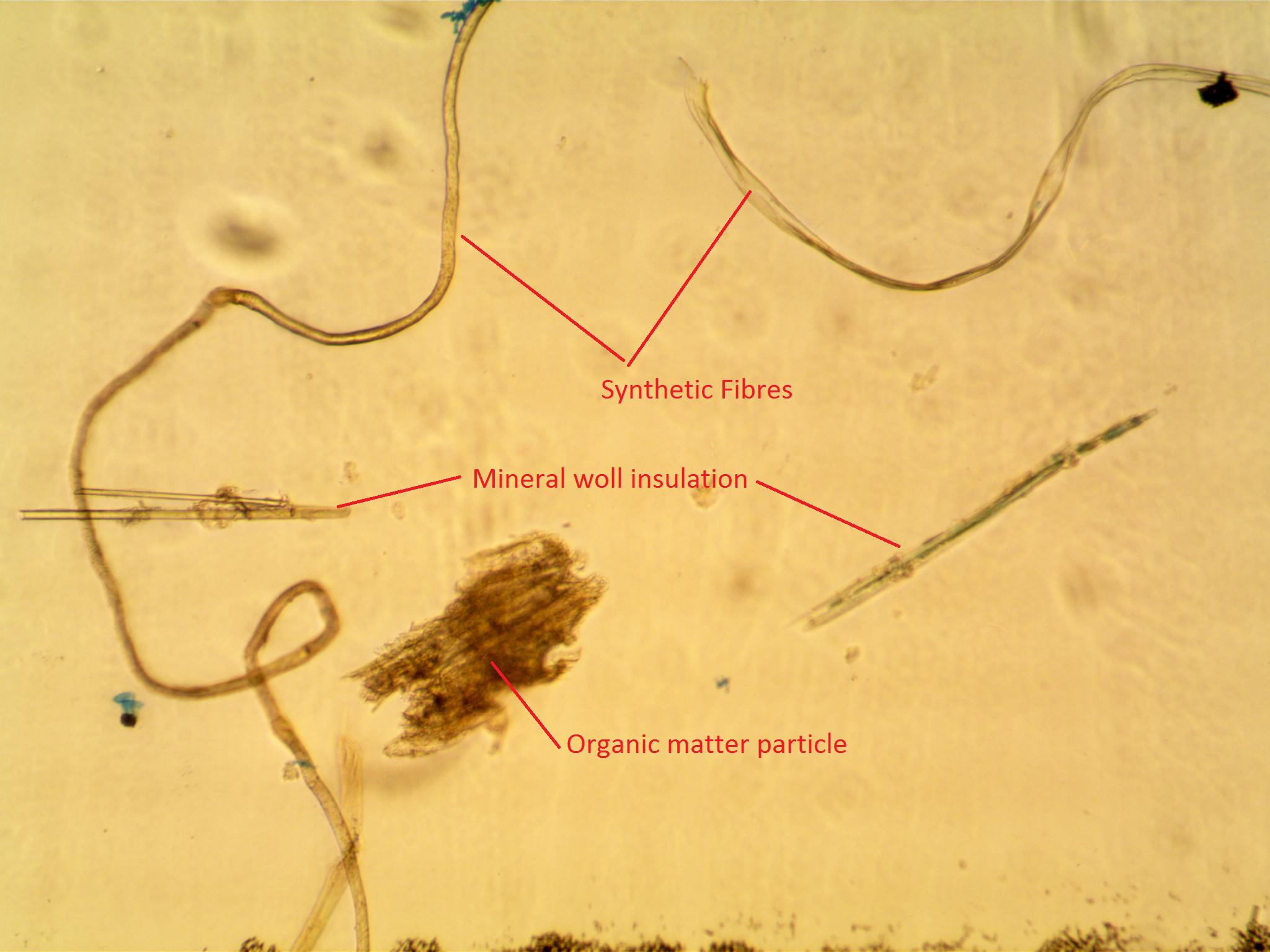
Dust accumulated on the surfaces of the air management and air distribution fabric socket
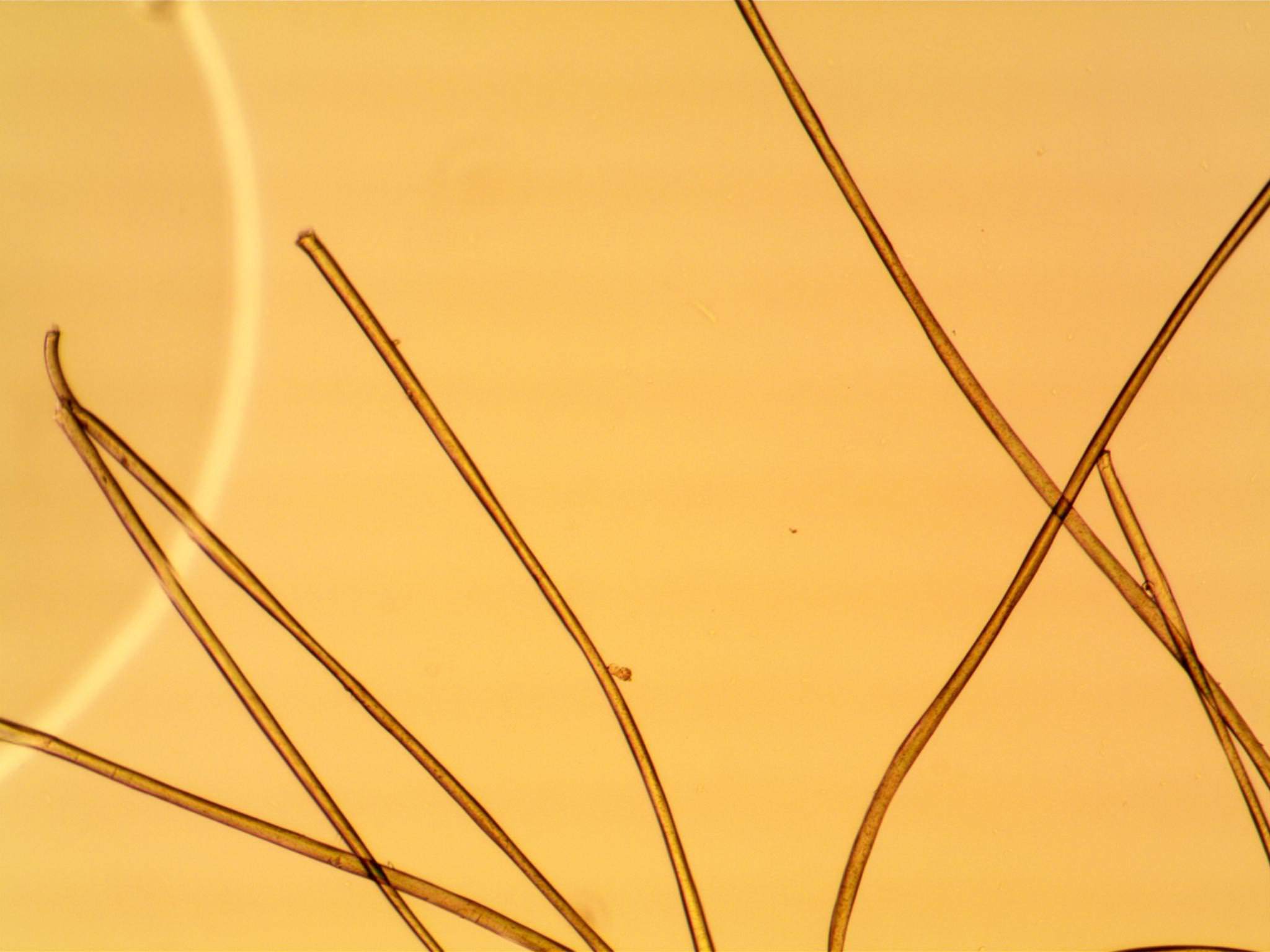
Fabric air distribution socket material
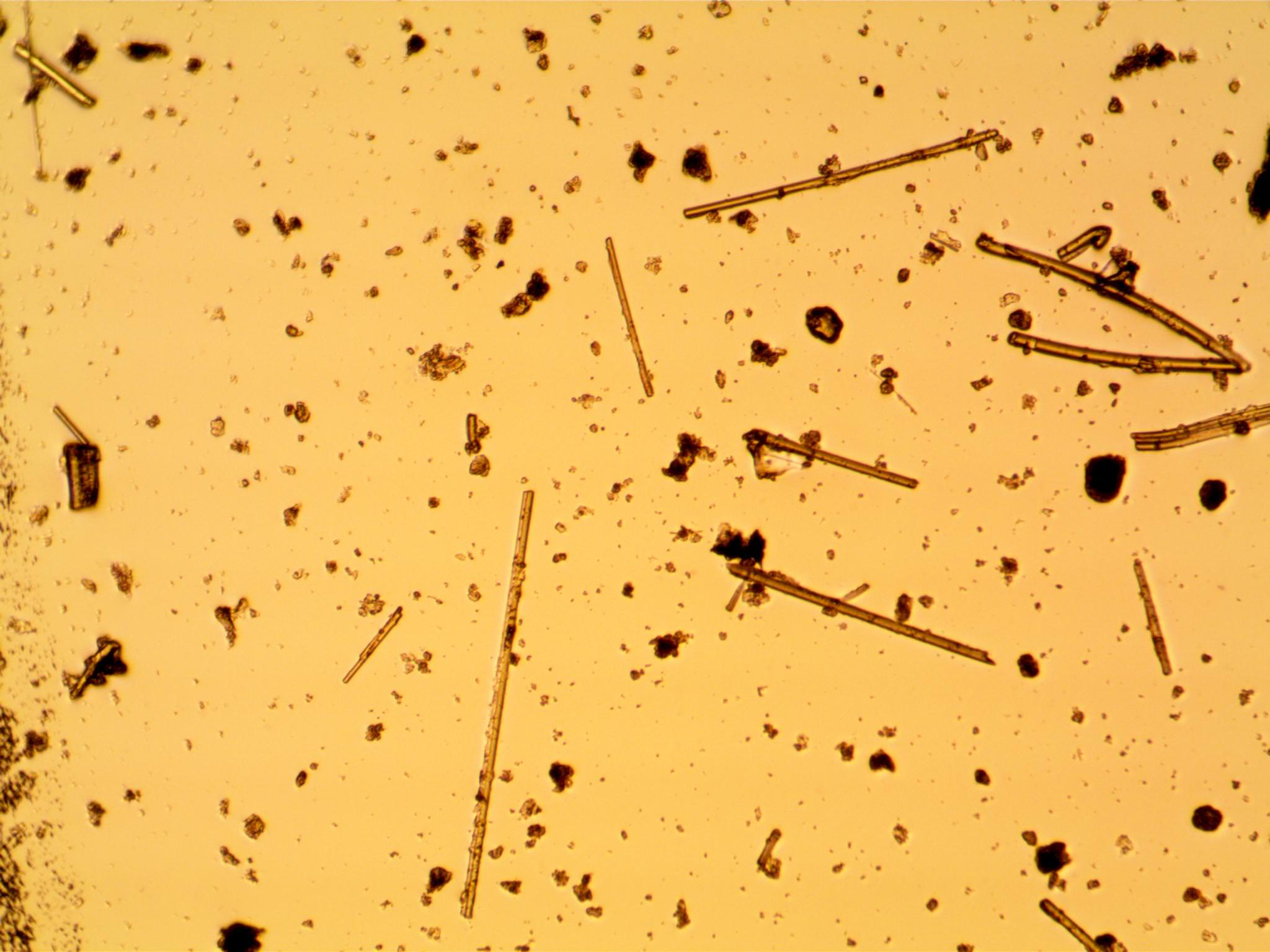
Ceiling void sound insulation pannels
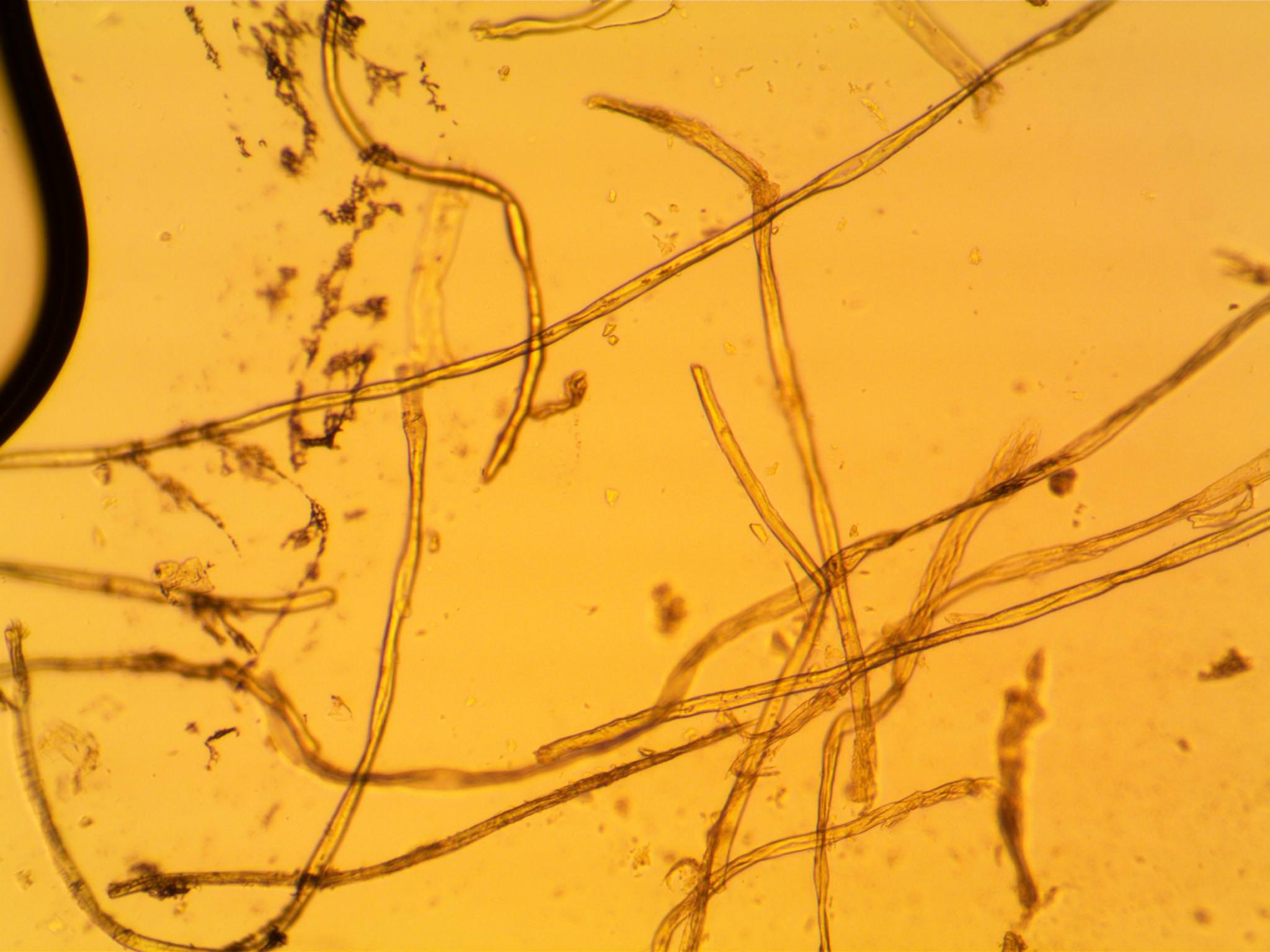
Rotary sanding tool

Table top sanding
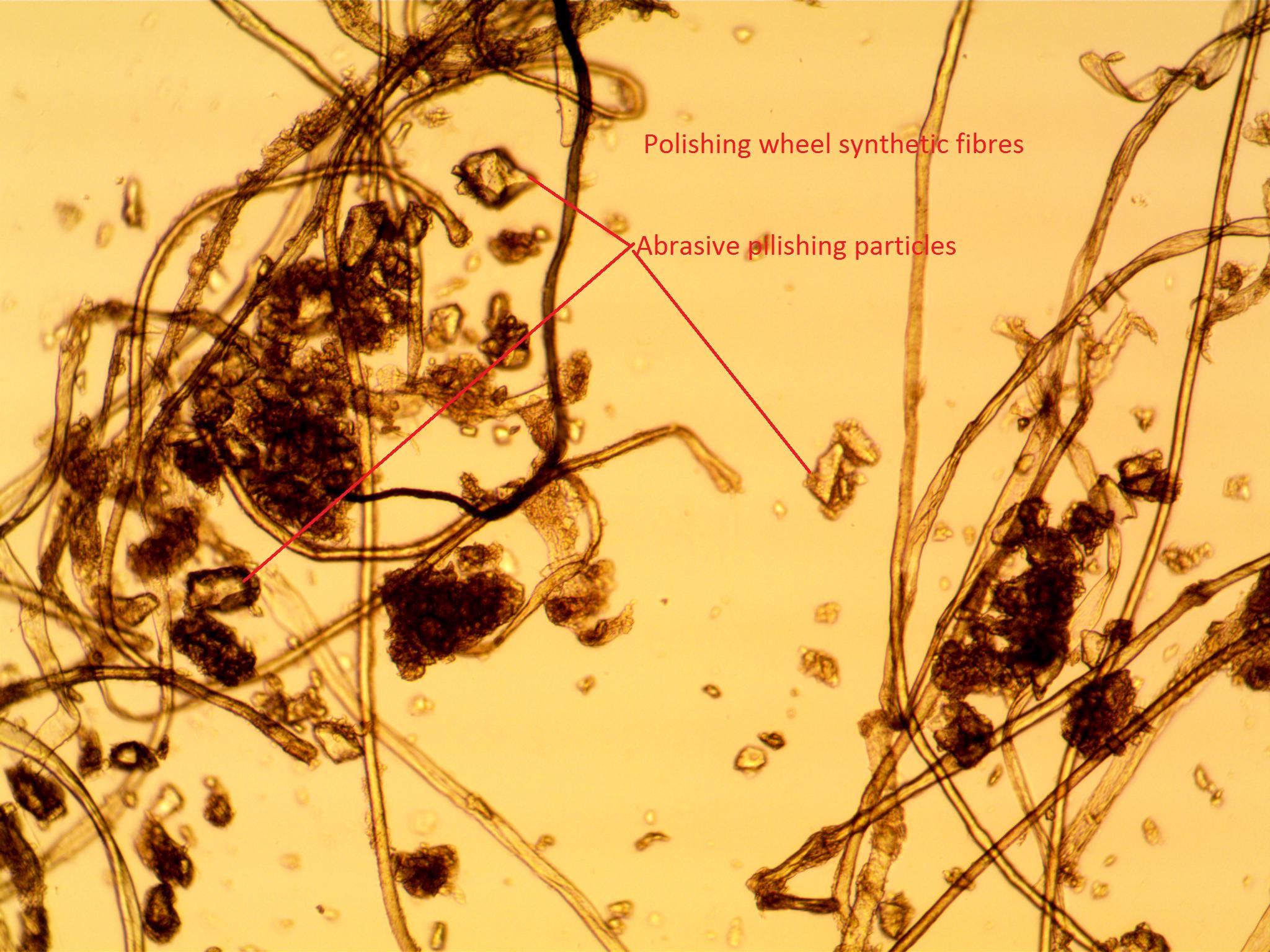
Polishing wheel material
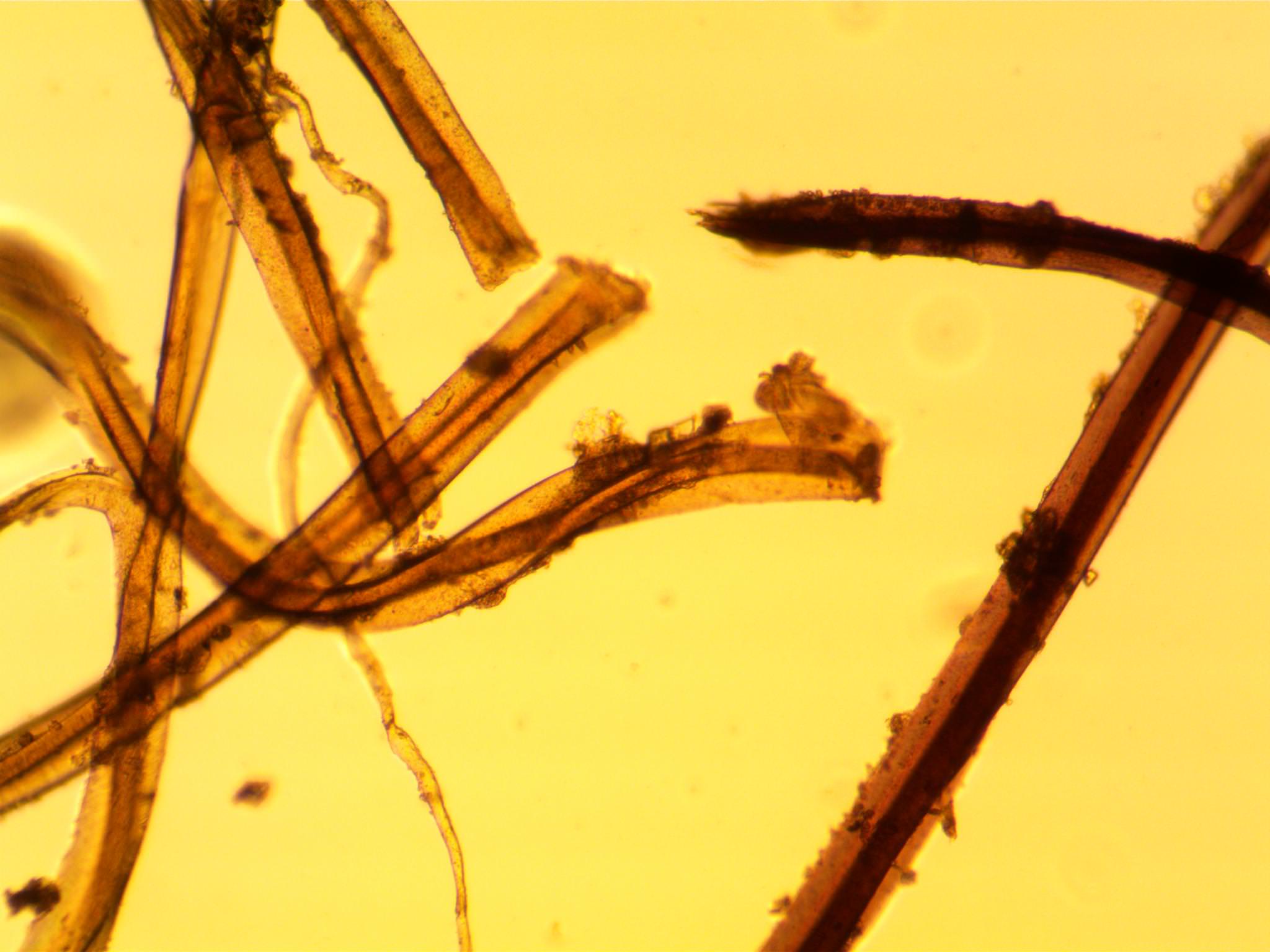
Carpet fibres
After examination of all the potential indoor sources likely to generate sufficient amounts of dust my attention has turned to the outside environment. I have collected air samples directly from the air distribution ducts to see in the contaminated air are being transported in from the outside.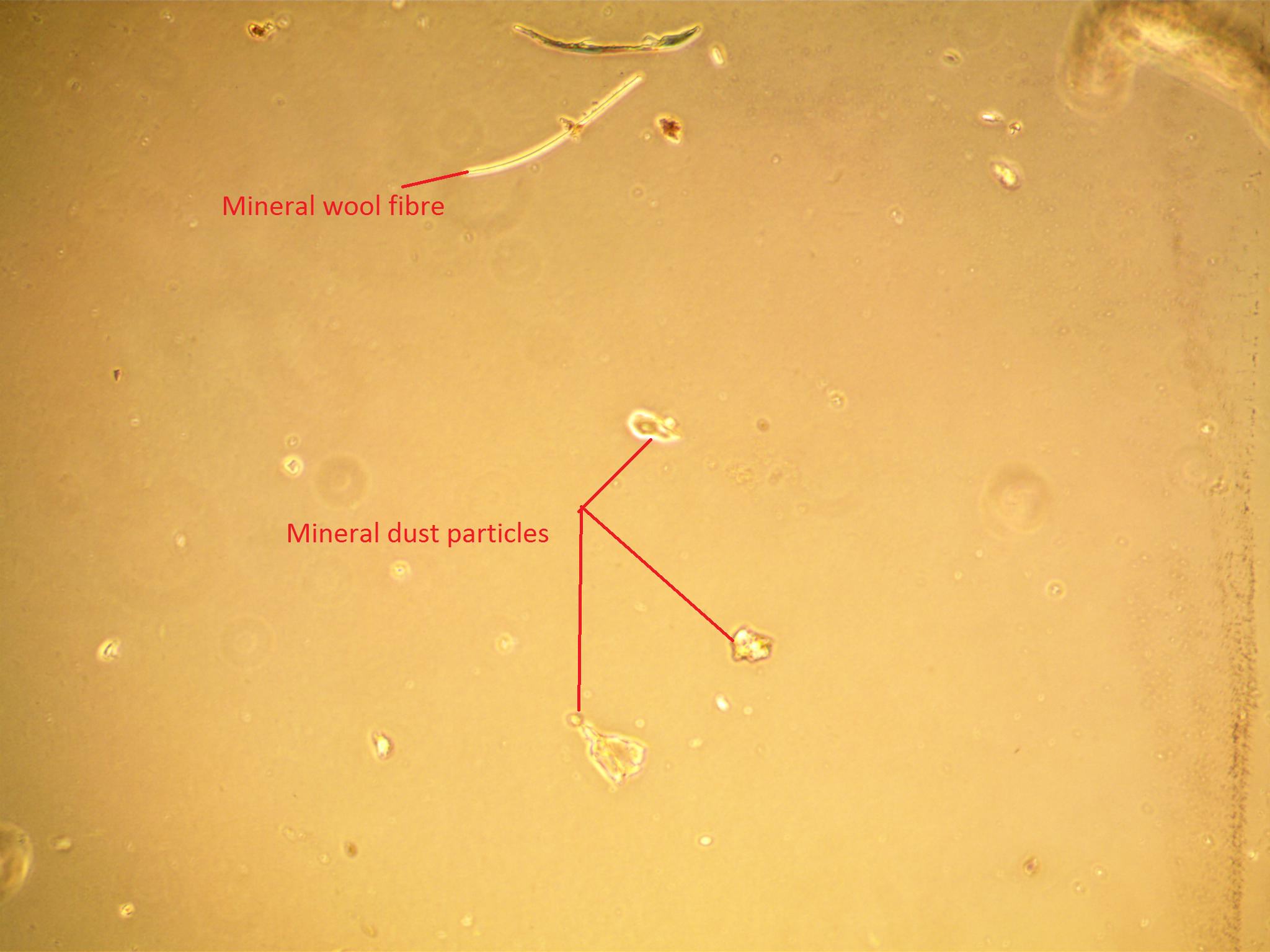
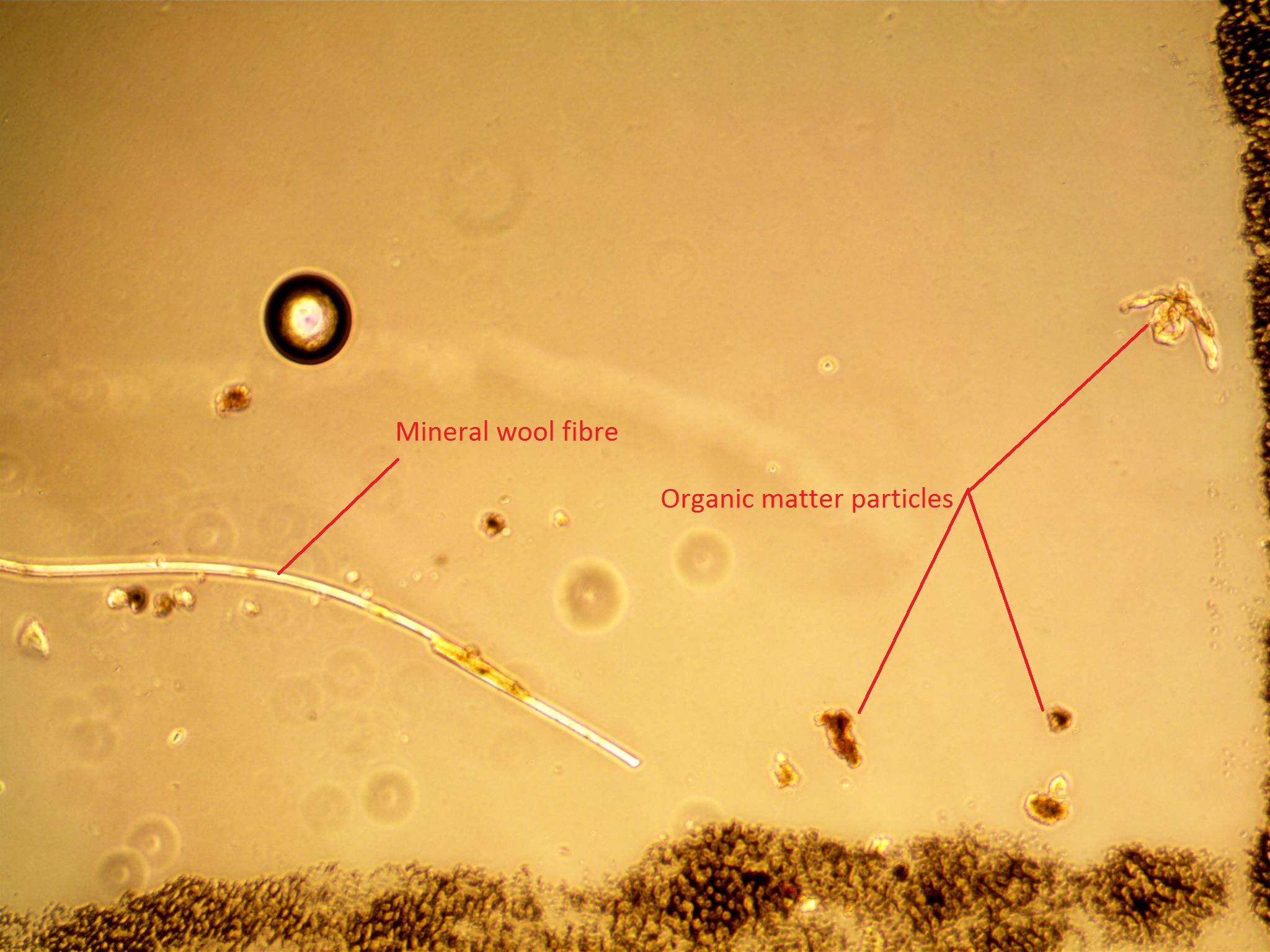
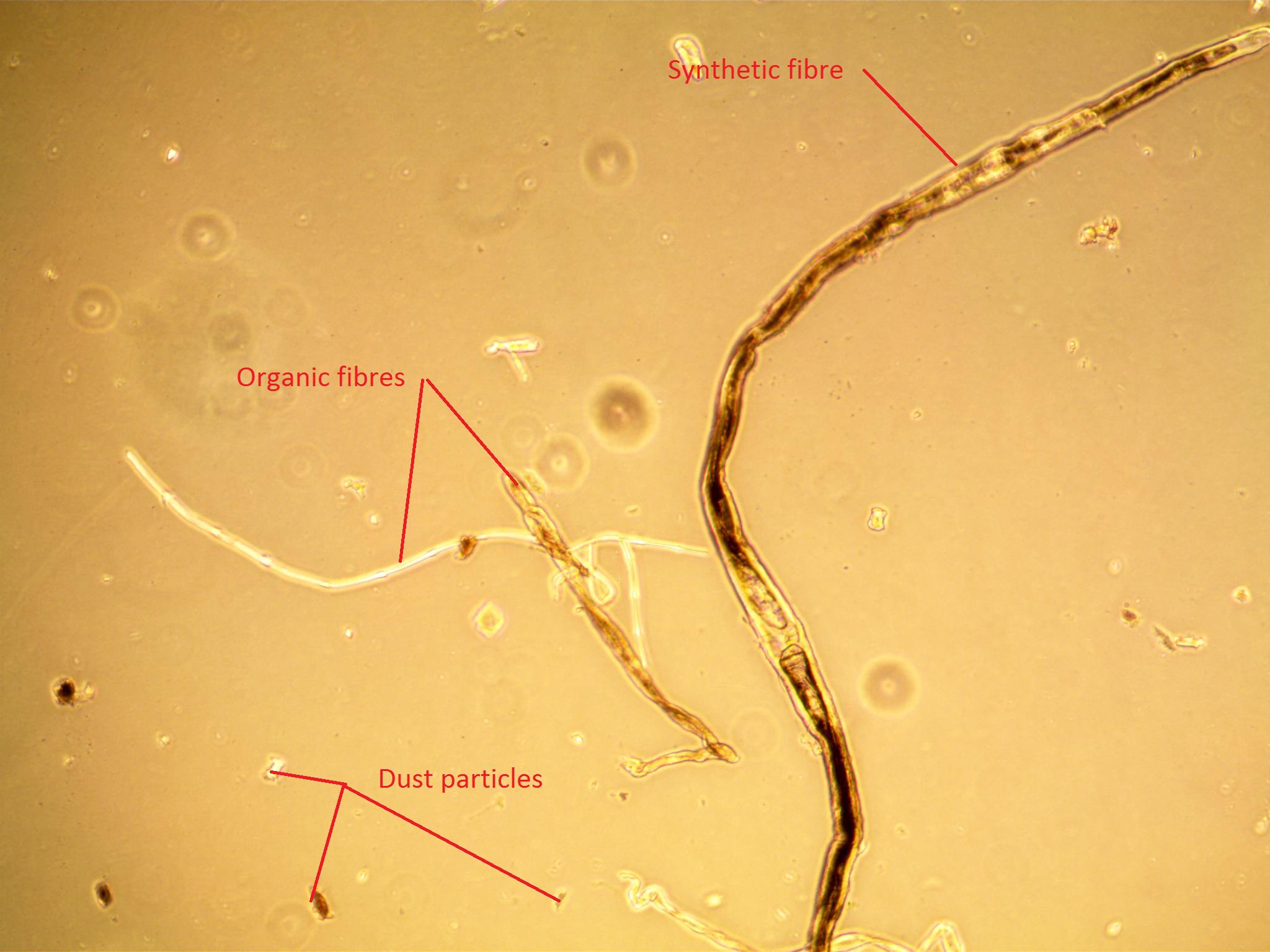
Air distribution duct air.
Conclusion of my investigation was that the building wide air management system is sucking in contaminants from the outside and fails to filter them out. These contaminants are then deposited on the unfinished work pieces created “seed” for creation of hard nodules during the final curing process.
Outside contaminants most likely contributed about 50% to the overall dust burden. Another significant source was the mineral fibre insulation panels in the ceiling void separated from the main production area by perforated metal panelling. Turning of the main air management system at the end of the day has caused small pressure differences between the ceiling void and the production area causing mineral wool fibres to be pulled in. From the internal sources the most significant contributor the overall dustiness were most likely the polishing wheels. These wheels are made of synthetic fibres which get torn away in contact with the polished material. The polishing machines were equipped with dedicated extraction systems but these were not used consistently by the employees.
By Tomas Gabor
