Reports of reoccurring mould contamination
Next, we travelled to Oxford where we were asked to carry out an indoor air quality assessment in relation to selected contaminants. The occupants of the property had reported reoccurring mould contamination in several rooms in the property. There were also reports of asthma symptoms worsening but were these a direct result of mould contamination? The original mould contamination was removed by the council so there were no signs of mould at the time of our assessment, just signs of previously treated areas.
When mould contamination is present in the property it usually develops in the far corner of the bedroom, ceiling in the bathroom, next to the window in the lounge and also in the corridor cupboard. With this knowledge we can pay particular attention to these areas when conducting our mould investigation.
Conducting a mould investigation
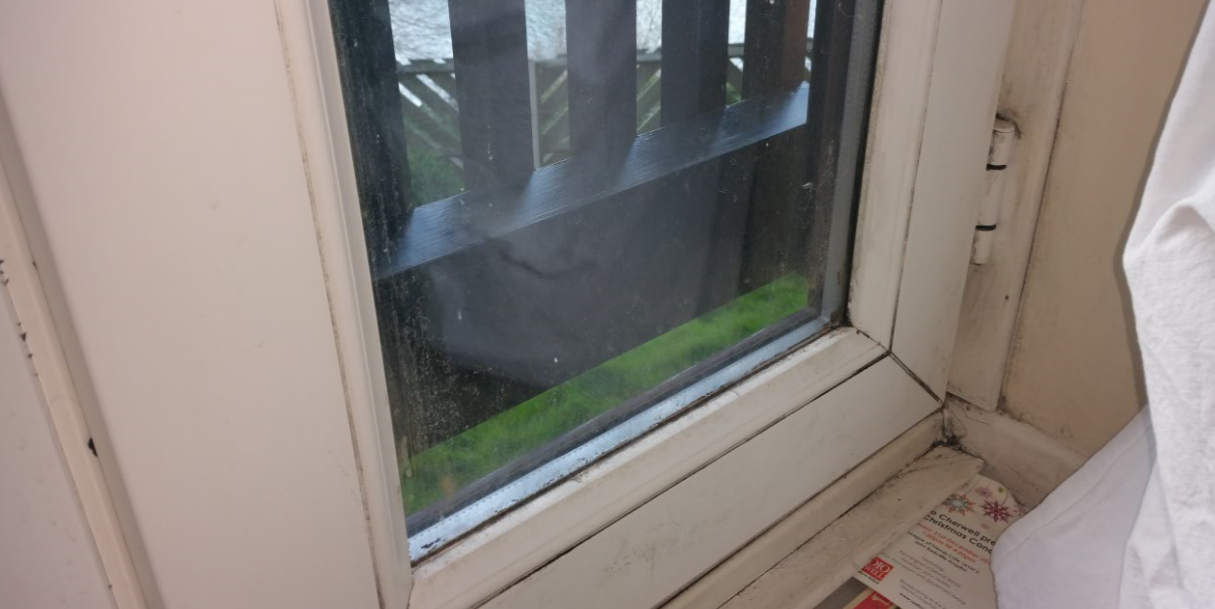
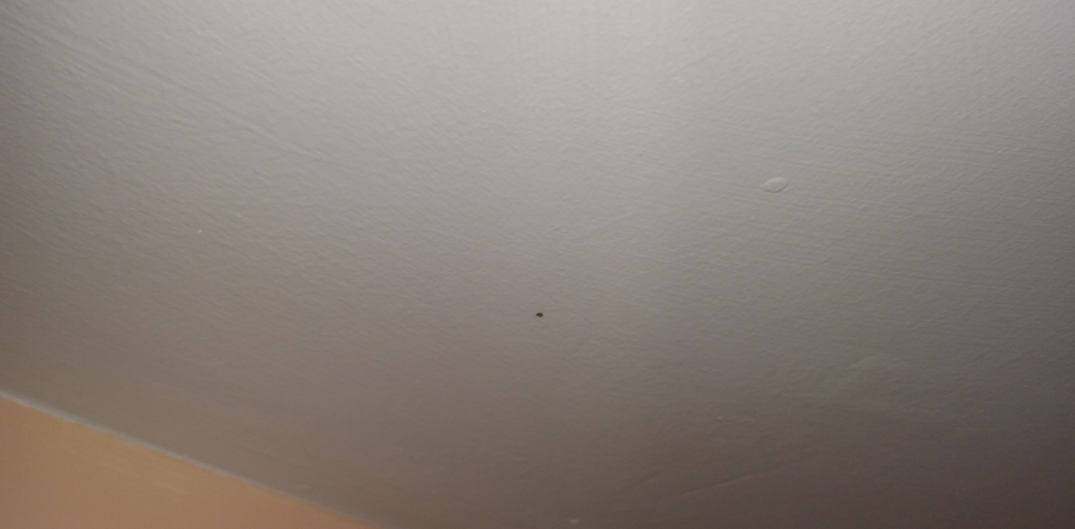
Our surveyor worked his way around the property, taking samples of airborne moulds onto Vesta spore trap cassettes and carrying out moisture mapping with the assistance of a Hydromette HB30 moisture meter and a Tramex moisture encounter plus. The samples we collected revealed that the indoor concentration of fungal spores in the air were significantly lower than the comparative background sample. This indicates that the indoor air quality in respect to fungal contamination is good. All identified mould species are common outdoor species which are carried into the indoor environment via air circulation. While inspecting the lounge area, our surveyor found evidence of Cladosporium mould around the window. A similar developing mould spot was also present on the bathroom ceiling. This indicates that the conditions in some areas of the apartment are favourable for development of fungal contamination.
Moisture mapping and investigation showed that the property is not suffering from an active leak in any of the indoor areas and the humidity profile in the indoor areas can be considered as normal and well within the comfort range for a home.
The three major sources of moisture in the property are the bathroom, cooking and clothes drying. The moisture generated in the bathroom is currently not controlled due to the lack of an adequate ventilation system. The moisture from cooking activities is currently not adequately controlled due to lack of an extraction system and finally the moisture generated from clothes drying is not currently controlled. These sources of moisture contribute to the intermittently high humidity levels within the property. The moisture contained in the indoor air then condenses on the coldest surfaces within the property, resulting in condensation and subsequent fungal contamination.
In order to control the moisture sources within the property we recommended our client to install an adequate active ventilation system in the bathroom and to apply anti condensation and antifungal treatment to the bathroom ceiling. An extraction hood should be installed above the cooking area which should be ventilated to the outside environment. And finally we also recommended to minimise the drying of clothes in the indoor areas or to use a tumble dryer. If the recommended remediation measures are not implemented it is likely that the fungal contamination will reoccur.