
Old buildings contain many materials which we now consider toxic or hazardous to health. These materials were either used directly in the construction of the buildings or were introduced later during its lifetime. Typical hazardous materials used in the construction were asbestos, lead and PCB others such as mercury or many specialty chemicals may have been introduced later. Once the building deteriorated and either need a complete refurbishment or demolition, lot of these hidden materials become exposed. Demolition operatives working with these hazardous materials are often unintentionally exposed to high levels of lead and other toxic substances.

I have carried out a lead survey on a large inner city building which is going to be completely refurbished. The buildings will be stripped to basic shell and new services and installation will be put in place. During the strip out phase of the operation many long enclosed parts of the building will be open. The demolition operatives will work with the materials, cut, scrape, and break many in the process. In order to prevent the potential exposure of the demolition operatives to toxic lead dust a survey of the whole building was commissioned.

The building consists of five floors which were partially stripped out from the internal furnishing. At the time of my lead survey the building was unoccupied as this would significantly affect my ability to carry out a thorough inspection. Lead survey is destructive in nature and requires gaining access to enclosed services, partition walls and ducting. The knowledge of other hazardous materials is essential because aggressive destructive inspection can disturb asbestos materials hidden in the fabric of the building.

The purpose of the lead surveys was to identify all lead containing materials in the building so the demolition contractor can adequately control the risk to his operatives. I have adopted a systematic approach in which I have divided the building to three distinct sections and then proceeded with the top to bottom survey in each one of them. I have exposed and access all the hidden and enclosed ducting, service risers and a representative number of structural support beams in the building. I order to provide comprehensive lead surveys I have collected samples from materials I have suspected contain materials. Because led was mainly used as an additive to the surface coating the range of possible materials within a building is very wide. However over the years I have developed enough experience to recognise material and elements of the building which were much more likely to contain lead than others.

All the collected samples contained some levels of lead in them. This is not unusual because elemental lead is naturally present in all materials from concrete used in construction to the surface paint on the window. This does not mean that lead was added to these materials, in fact it was naturally present it the base material. Most of the samples materials contained traces of lead in the concentration between 0.0008-0.1% which is not considered significant and such materials would not be classified as lead containing.

Currently the various regulation in the United Kingdom consider a concentration of lead above 0.5% as significant for was disposal purposes and such waste is classed as hazardous waste. In regards to the risk of operatives being exposed to high levels of lead during work the HSE considers 1% of lead content in material as significant. Work, such as cutting and grinding on material which contain more than 1% of lead can lead to significant exposure.
The lead survey I have carried out for my client allowed him to identify potential risk from lead of site and make arrangements that materials with high lead content are handled appropriately.
Health Effects Caused by Lead Exposure in the Workplace
Lead exposure can be from inhaling, ingested, or absorbed lead particles, all of the health effects are the same. However, the body absorbs higher levels of lead when it is inhaled. Within your body, lead is absorbed and stored in bones, blood, and tissues for years even after exposure stops. Lead in the bone can come back into the bloodstream and continue to damage the brain and other organs for years to come. There is a common concern that lead may mobilise from the bone among women undergoing menopause, post-menopausal women have been known to have higher blood lead levels than pre-menopausal women.

Short term lead poisoning can happen if a person is exposed to very high levels of lead over a short period of time, when this happens the person may experience:
- Constipation
- Tired
- Headaches
- Dizziness
- Abdominal pain
- Loss of appetite/ nausea
- Memory loss
- Pain or tingling in hands/feet
These symptoms occur slowly or may be symptoms from other health reasons, lead poisoning is easily overlooked, exposure to high levels of lead may cause organ damage such as kidney and brain damage. Very high lead exposure can also result in death.
Lead affects children much more than adults, children tend to show signs of severe lead toxicity at much lower levels than adults, this often occurs to children whose parents unknowingly bring home lead dust on their clothing.
Repetitive/prolonged lead exposure may cause the person to feel effects such as:
- Abdominal pain
- Depression
- Forgetful
- Irritable
- Nausea
- Distracted
When you have been exposed to lead for a considerable amount of time, you may be at risk of high blood pressure, heart disease, kidney disease, and dramatically reduced fertility.
The damage caused from lead exposure is irreversible and should be avoided at all costs. If you suspect your employees may be exposed to lead, get in touch with Sysco Environmental who can perform a comprehensive lead exposure assessment. For more information click here
Safely Removing Lead Paint
Due to lead paint being highly toxic you need to take the correct safety precautions to ensure you are not exposed to inhaling or absorbing any lead particles. When removing lead paint you will need certain PPE, tools, and materials in order to undertake this task safely.
PPE
- Disposable Gloves
- Disposable Overalls
- Respirator (face mask)
- Glasses/Goggles
Tools
- Bucket
- Dustpan
- Vacuum
- Paint scraper
- Putty Knife
- Rags
- Utility Knife
Materials
- 6-mil poly
- Bin bags
- Duct tape
- Spray bottle
- Medium + coarse sanding sponge
Step One
Create a sealed exit, you can do this by duct taping the 6-mil poly around the door way and adding a slit down the centre leaving a uncut space at the top and bottom, next duct tape another sheet at the top of the door creating a curtain to prevent any dust going out of the slit when not in use.
Step Two
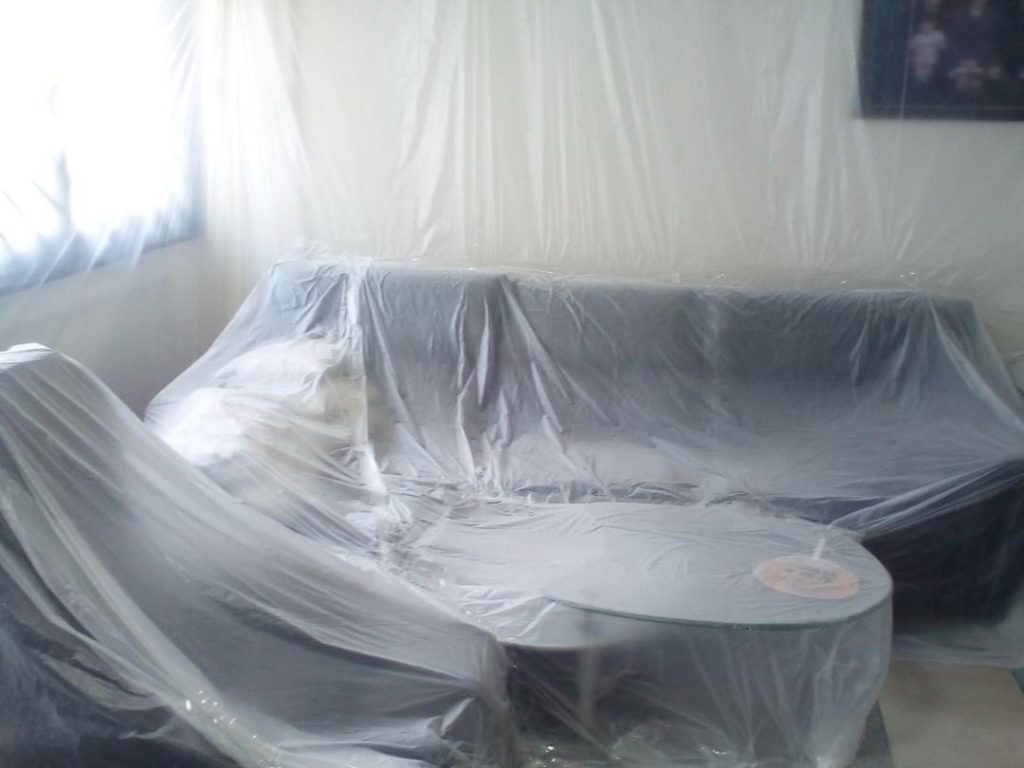
Control the dust by spreading the poly across the floor and duct taping the edges to ensure no excess lead dust comes into contact with your flooring. This is more important if you have a carpet, once lead dust gets into the carpet it is virtually impossible to remove it. You should tape the poly to the skirting boards but be aware that it may pull the paint off. Remove all rugs and as much furniture as possible, furniture you cannot remove cover in the poly to ensure no dust can get to them and keep all windows closed so there is no air flow to blow the dust around. Make sure there are no children or pets around as this is highly toxic and lead poisoning is extremely dangerous to them.
Step Three
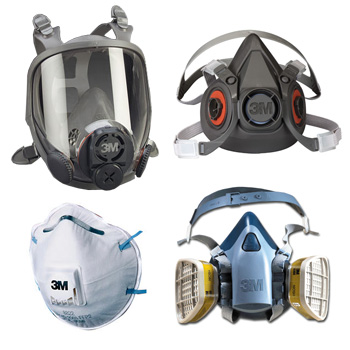
Equip all PPE, make sure you are wearing a long sleeved shirt or disposable overalls, gloves, glasses and your face mask. Make sure when the task if finished all clothing worn must be cleaned separately to other clothing to ensure no contamination. Take a shower after you have finished to wash off any dust that you have come in contact with.
Step Four
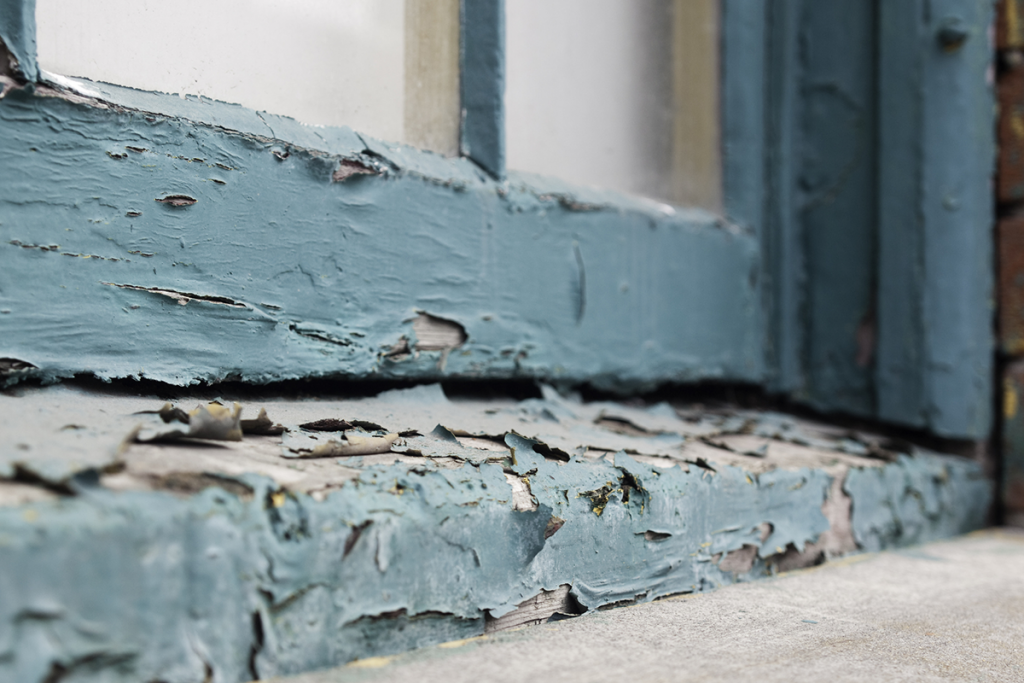
Wet the area with water from the spray bottle before disturbing any paint, when the area is wet the dust will cling to the painted surfaces rather than blowing around in hazardous clouds. Then you can simply wipe away the wet sludge. Working wet will seem messy at first but scraping and sanding will go as quickly as when working dry and the work site will actually remain cleaner than if you was working dry, as well as it being a lot safer.
Step Five
You can now begin scraping loose flaking paint, starting at the top and working down, wipe up water and sludge frequently with cloth or the vacuum, wringing it out into the bucket.
Step Six
After scraping, you can now begin to wet-sand the walls/windowsill, ensure that it is wet by giving it another spray with water. Just remember you do not need to remove all of the paint, only any loose paint as when painted over the risk of exposure is nulled.
Step Seven
Clean up thoroughly, making the room safe from lead exposure requires not only paint prep mess, but also any lead dust that might have collected on the floors and other areas before you started. Begin by vacuuming paint chips and other debris. Gunk sticks in cracks so dig it all out as you go, tuck a knife or screwdriver inside a paper towel and run it along corners to dig all of the gunk out.
Step Eight
Now mix an all-purpose cleaner and water in a spray bottle and soak a heavyweight paper towel and begin washing the area. The trick to successful cleaning is to wipe in one direction to avoid recontamination clean areas. The idea is to always push the sludge downwards.
Finally
We’re almost there now! Finally, you want to wash the area down with clean water starting from the top and working downwards, wipe horizontal surfaces in one direction and refold the cloth to exposure a clean surface after each wipe. Wet down all of the poly, so the dust sticks and fold into the centre and put it into your bin bag. Now you can vacuum the floor to remove any dust that may have got through the poly. Once vacuumed you can give the floor a wash with all-purpose cleaner to reduce any contamination that may be left over.
Congratulations, you have safely removed all lead paint safely without putting yourself in harm’s way and the room is spotless!
If you are unsure that the paint you are removing is in fact Lead you can contact Sysco Environmental for a Lead survey, or purchase the Lead Test kit and send a sample for analysis. See more here
Testing for Lead Paint
Lead Paint is highly toxic and as you know can cause long term irreversible health effects, this is why it is so important to test if you have lead paint if you are unsure before taking any action. Sysco Environmental offer a Lead Testing Kit as well as Lead Paint surveys to help building owners determine the presence of lead paints on their premises. Sysco have participated in numerous lead projects, from domestic lead paint to large scale projects in railway buildings and industrial installation.
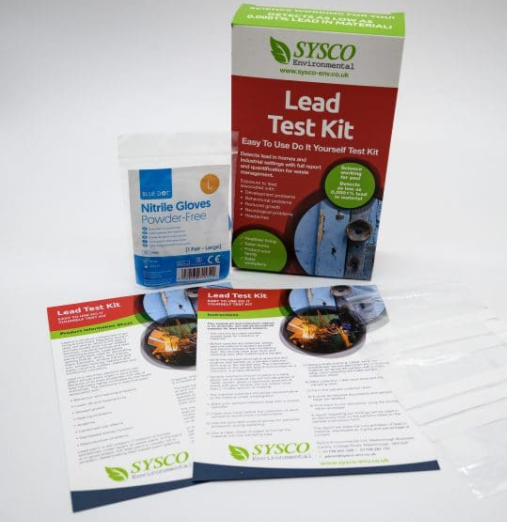
If you are an orginisation or building owner and you choose a full survey by Sysco’s experienced lead surveyors you can benefit from
- Analysis
- Hazard evaluations
- Exposure monitoring
- Biological monitoring
- Contamination tracking
- Environmental and site perimeter tracking
- Guidance on regulations and training of employees
The team will use various techniques when testing for lead paint, including paint sampling, swabbing, and XRF (X-ray fluorescence). However, if you are wanting to redecorate your home and don’t require the extensive examination, you can also purchase the Lead Testing Kit, which is designed for domestic and professional use to evaluate the presence of lead paint. The testing kit is easy to use with straight forward instructions, reliable scientifically validated testing methods, accredited analysis from your sample, and can detect lead as low as 0.0001% in materials, so no lead will slip past you. A full laboratory report is also included with your results and interpretation of your test based on the WHO guidelines.
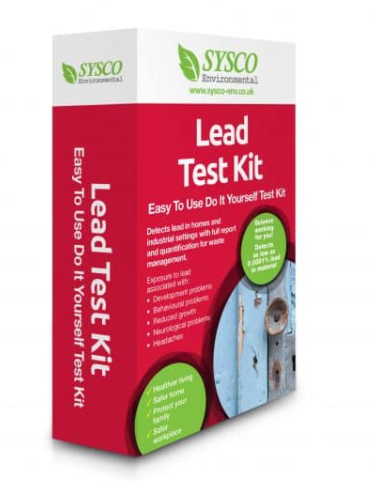
This test kit has been developed to evaluate the concentration of lead in materials such as paint, the kit allows you to take a sample without specialist training and send back to us with a full prepaid envelope, and allow us to examine the sample to give you all the information you need to proceed in removing the paint or materials safely.
Reliable Information
Constructon Hazardous Substances


