
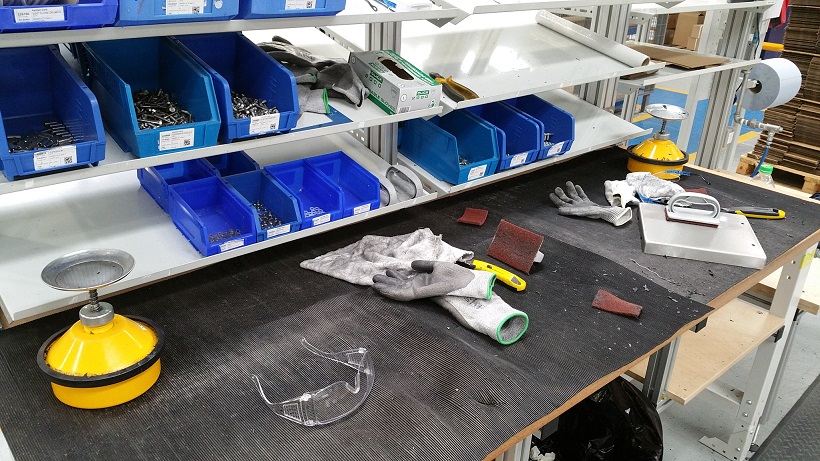
I have been called in by one of my regular client to carry out a quick response test on a newly introduced task. Two operatives working in a large open plan area were using a heavy naphtha hydrocarbon solvent to clean and degrease electrical components. The operatives were using solvent soaked cleaning rags to wipe down metal boxes. They were dispensing the solvent from a small pumping canister directly onto a rag. Both employees were using disposable latex gloves coved by non-disposable working gloves.
The operatives started to complain about heavy odours and were becoming concerned about the effect of solvent degreaser on their health. The main health effect of solvent exposure are acute and are manifested by development of dizziness, lack of concentration and other general narcotic effects. Long term exposure effect can result is skin irritation, dissolving of fatty skin tissues and development of dermatitis.
I have carried out in inhalation and dermal exposure assessment to evaluate the amount of solvent vapour present in the working area. To collect the samples I have standardised air sampling method. The dermal exposure assessment was carried out by examination of hand for signs of solvent degreasing and white patches.
My assessment of solvent inhalation exposure has indicate that also strong odours were sometimes present in the areas the average personal exposure levels of the operatives were below the hydrocarbons exposure levs set in the CIFC-HSPA (Brussels). Solvents have typically a very low odour threshold and therefore presence of strong odours cannot be used as a good indicator of concentration and personal exposure. The odours threshold limit for heavy naphtha is quite wide and is sometimes reported and between 0.5 to mg/m3. The exposure limit for this particular mixture of hydrocarbons was stated ad 350 mg/m3 which is significantly above the odour threshold limit.
The dermal exposure assessment indicated that the hand protection used by the operatives was inadequate. The beak through time of solvent acting on a disposable latex glove is very shorts and in the region of couple of minutes. The Work with solvent requires the use of nitrile rubber gloves conforming with the BS EN 374 Standard. Although the breakthrough time of nitrile gloves is much longer it is not limitless and regular changes are required. The frequency of change will be dependent on the toxicity of the substance, frequency of use and it permeability through the glove material.
In my assessment I have concluded that also inhalation exposure was low and not expensive engineering control are required, the dermal exposure was significant. I have recommended that the use of disposable rubber gloves is discontinued and supplemented by chemically resistant nitrile gloves.
