
Wind turbines are one of those odd and unusual places where you would not anticipate a mould problem. Their construction is of almost pure metal with synthetic coating and minimum of absorptive surfaces. In recent years employees working on wind turbines farms have started to encounter quite significant mould contamination problems. Typically internal surfaces of the turbine get covered large expanses of mould colonies.
Mould colonies growing on the internal surfaces of wind turbines are unlikely to pose a threat to turbine structural integrity even in the long run. However, they represent a hazard for personnel requiring to periodically enter and work in these areas. Turbine’s body is essentially and very large but still enclosed space with limited ventilation and air circulation. Large expanses of mould will produce copious quantities of mould spores. Furthermore if the present mould happens to be of toxic, significant quantities of toxins can be present in the air. The combination large expanses of mould cover, potential toxicity and lack of ventilation allow for accumulation of hazardous substances in this enclosed space.
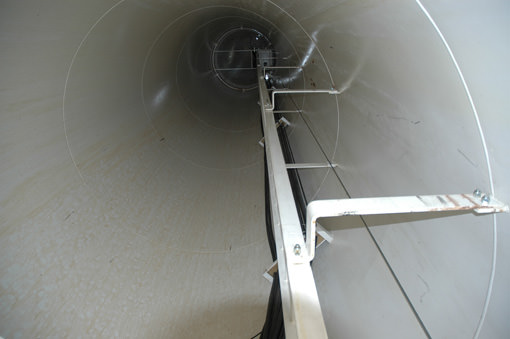
Inside of a typical wind turbine
Personnel entering such an enclosed space is immediate exposed to significant quantities of mould spores and hyphal fragments and potentially mould toxins. Furthermore the access to various components of the wind turbine tower required intensive physical strain which naturally increases the breathing capacity of the person thus exposing him to hazardous biological material even more then under normal circumstances.
In terms of mould species most frequently colonizing internal part of the wind turbines we have identified so far as the most abundant Cladosporium cladosporioides, Penicillium chrysogenum and Yeast. Less frequent species are Chrysosporium panonum and Penicillium cyclopium. In certain cases we have also identified potentially pathogenic species of Fusarium oxysporum, Mucor hiemalis and Paecilomyces varioti which could present serious risk to personnel.
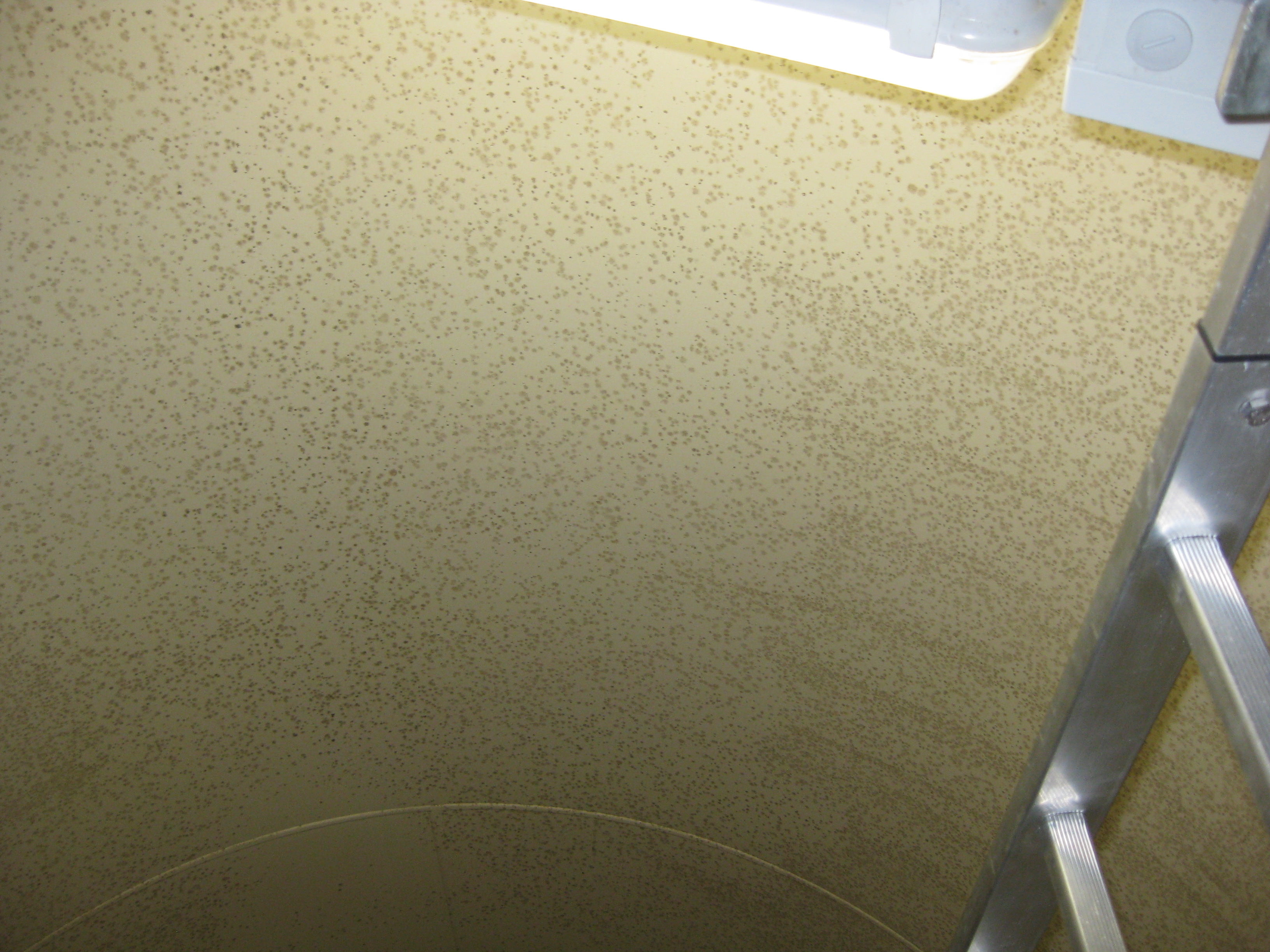
Mould can grow on almost any surface and this is a fine example how resilient mould can be in colonising available surfaces. For any mould to grow certain environmental conditions needs to be met. It most importantly requires significant quantities of water and small amount of nutrients. In the case of a wind turbine the nutrients are either provided by the synthetic coating itself or by a accumulation of organic debris (pollen, microscopic plant debris, dust etc). Water comes from the outside environment. The most likely reason for water accumulation is condensation. Moisture loaded and humid air from the outside enters the turbine. It comes into the contact with the colder turbine metal body. Lowering of the air temperature causes the water to condense on the metal surface. The process is in essence identical to condensation visible on cold water pipes or sometimes on ceramic toilet water cisterns.
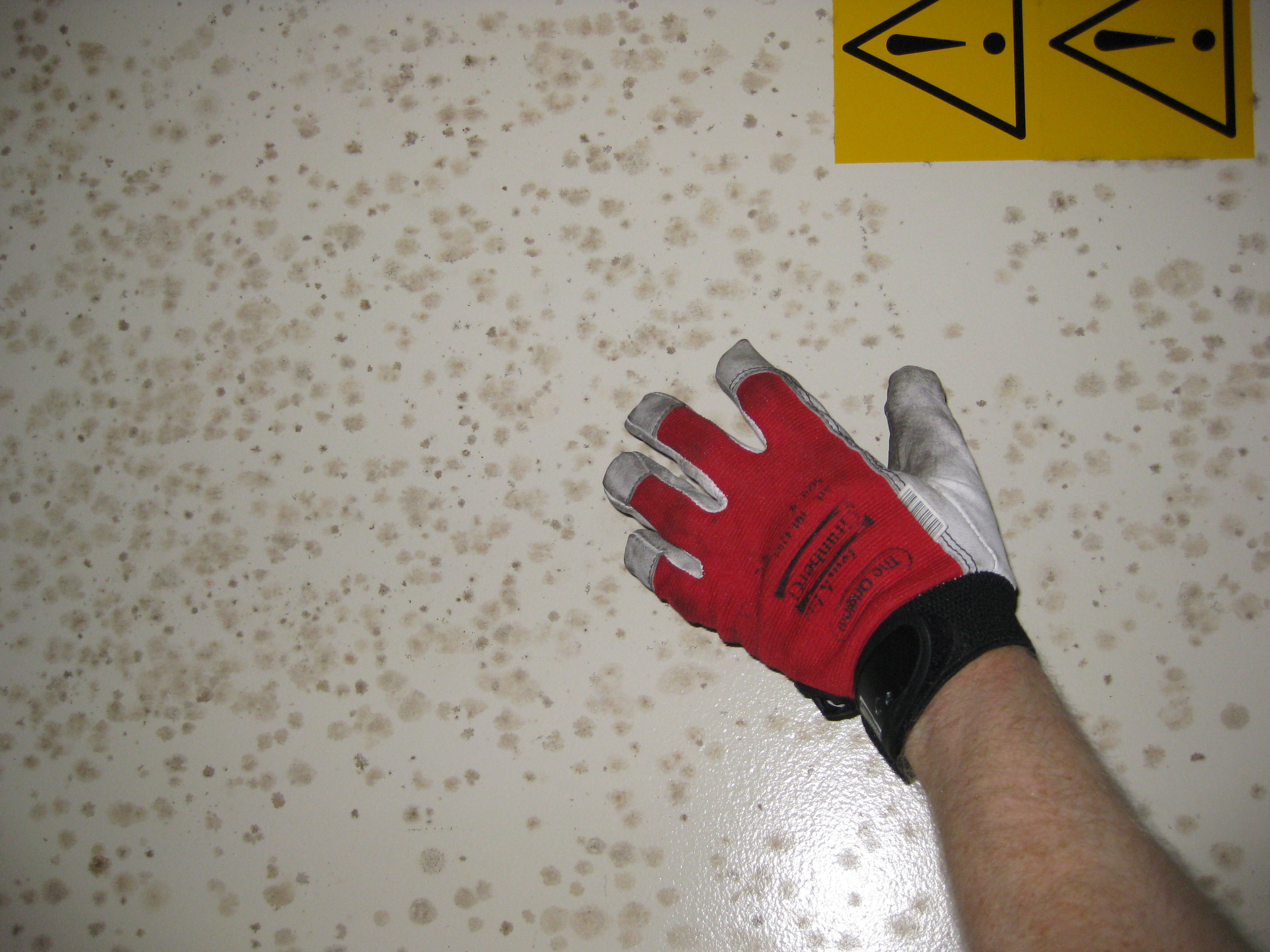
Effect of moulds on the turbine itself is most likely negligible however if the contamination is severe and remains in place for long time, deterioration of the protective coating can occur. Consequently water could enter the areas behind the protective synthetic coating and cause corrosion. It is difficult to speculate how significant this corrosive effect could be but when considering that the typical life span of a turbine is 20-25 years then the cumulative effect can become significant. Another aspect which needs to be considered when evaluating the effect of moulds on wind turbines is the ability of some, mainly penicillium, moulds to degrade synthetic materials and lubricants. In any case acting of the mould on the wind turbine and its components would be a very slow process which may not represent significant structural or operational risk. Far more serious is the potential risk to health of the personnel working in the turbine itself.
By Tomas Gabor, Msc


