
Water damage to the property is not usually limited to the immediately obvious water staining and possible material deterioration but sometimes escalates into a more complex issue affecting the indoor air quality in the whole property and having negative effect on the health of the occupants. Water damage to a building is usually not a simple issue and quick fix ( fixing the leak) is not the whole solution. Sudden ingress of water into the indoor environment saturates materials like carpets, underlay, soaks into floor construction and penetrates the walls. Plasterboard partition walls are particularly prone to water damage and can soak up large quantities of water. If such walls are fill with mineral wool insulation the drying process can be long and often complicated. In most properties the collateral damage of an immediately obvious water leaks are often overlook or just ignored. This is often case is rental properties where landlords are trying to keep the costs to minimum by addressing only the most obvious and immediate issues. In this particular case a small water leak has developed to a domestic boiler/hot water tank system. The leak was spotted relatively quickly and to my knowledge resolved by the landlord promptly.

Fauly boiler caused water saturation of carpet and floor timer
The small water leak has thoroughly saturated the carpet and the floor cavity in the boiler cupboard. Due to the fact that the cupboard by its nature is an enclosed and poorly ventilated place the water could not dry sufficiently quickly. High moisture content, high temperatures and plenty of microscopic food have triggered both, contamination by typical water damage moulds and by small carpet eating bugs.

Damage to carpet and foam underlay by bugs and larvae

Front section of discarded larval skin

Mid section of discarded larval skin
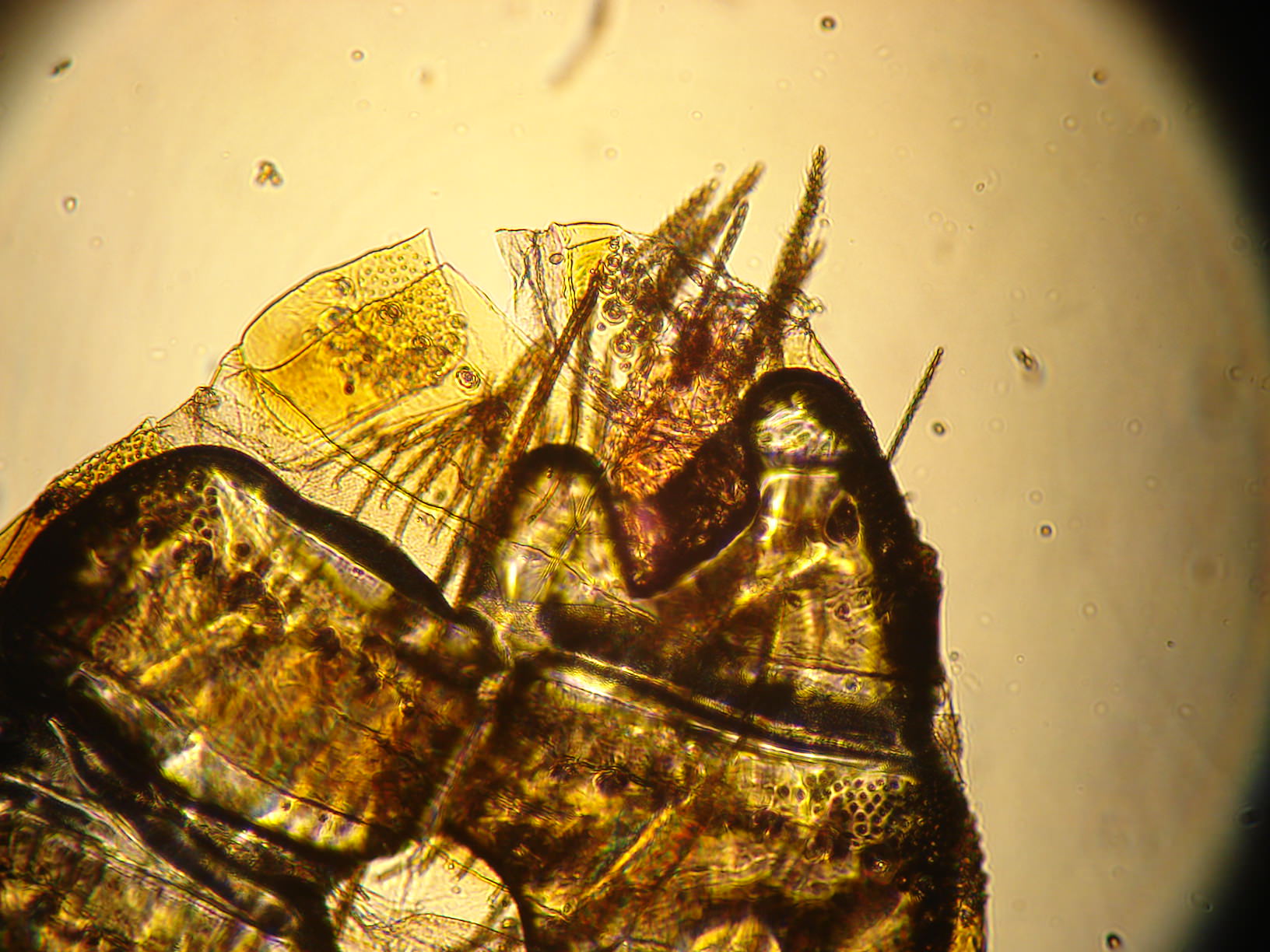
Back section of discarded larval skin
The bugs have spread from the small cupboard carpet through the adjacent corridor and into the 3 metres distant living room and bedroom. All the carpeting in the property was damaged to a degree with visible discoloration and “bold” patches. In the end the whole property had to be stripped from carpeting and foam undelays to rid them of the bugs.
In addition to the bug infestation the carpet in the cupboard had become completely overgrown by highly allergenic mould Chaetomium. This mould releases large quantities of characteristically shaped spores into the indoor air. My investigation showed that large quantities of Chaetomium and Penicillium/Aspergillus types of spores were present in the air throughout the property in some instances well over 3600% above the background typical for this area.

Even a small area of well established and developed mould can seriously contaminate the indoor air. In this particular case I have measured the background concentration of fungal spores at 3.7K with Penicillium/Aspergillus contribution about 15% to the total genera identified. No typical water damage moulds (like Stachybotrys or Chaetomium) were detected in the outdoor samples. In contrast to the outdoor samples the indoor air in the living room of the property had a mould spore count of 15.5K and was made of 36% Penicillium/Aspergillus and about 47% of Chaetomium. This represent an increase in total spore burden of 318% and clear confirmation of water damage associated fungal contamination. Similarly the property’s corridor closes to the cupboard had a total spore count of 137K made of 46% Penicillium/Aspergillus and 45% Chaetomium moulds representing a staggering increase of 3600%. The seemingly non-problem and clean living room had a total count of 52K made of 19% Penicillium/Aspergillus and 48% Chaetomium moulds representing an increase of 1320% above normal conditions.
The property occupants were suffering with respiratory problems, frequent coughs and yes irritations. After the property has been professionally decontaminated the adverse health symptoms subsided.
By Tomas Gabor


