
Chemicals substances are rarely used in pure form for creation of art. However when the artist finds the courage to experiment some spectacular results can be achieved. I have recently had the opportunity to visit a piece of stunning art where the artist has decided to transform a small flat with copper sulphate crystals. The photographs I have taken during my inspection show how spectacular results can be achieved when art and chemistry are combined.
I this article I would like to look this piece of art from the point of view of an indoor air quality inspector and evaluate the potential of exposure of public and the personnel inside of this art piece. As many of you know Copper sulphate is a relatively common chemical often used as an ingredient in various biocidal agents to prevent disease in fruits, vegetable, crops and also prevent infection in farm animals and horses. It is commercially available in two forms; as a white powder (anhydrous copper sulphate) and as a blue crystals or powder (penta hydrate of copper suphate).
Both forms are relatively stable; the anhydrous copper sulphate readily absorbs water slowly turning into blue crystals. For this property it is sometimes used and desiccating agent in production of certain drier food products. When exposed to high temperatures, 650C, it decomposes into copper oxide and toxic but unstable sulphur trioxide. When blue hydrate of copper sulphate is heated above 30C it looses 2 of the 5 molecules of water, exposure above 110C liberated further 2 molecules and finally heating above 250 C releases the last molecule of water turning it into it’s anhydrous white powdery form. Copper sulphate solution is strongly corrosive to iron and galvanized iron.
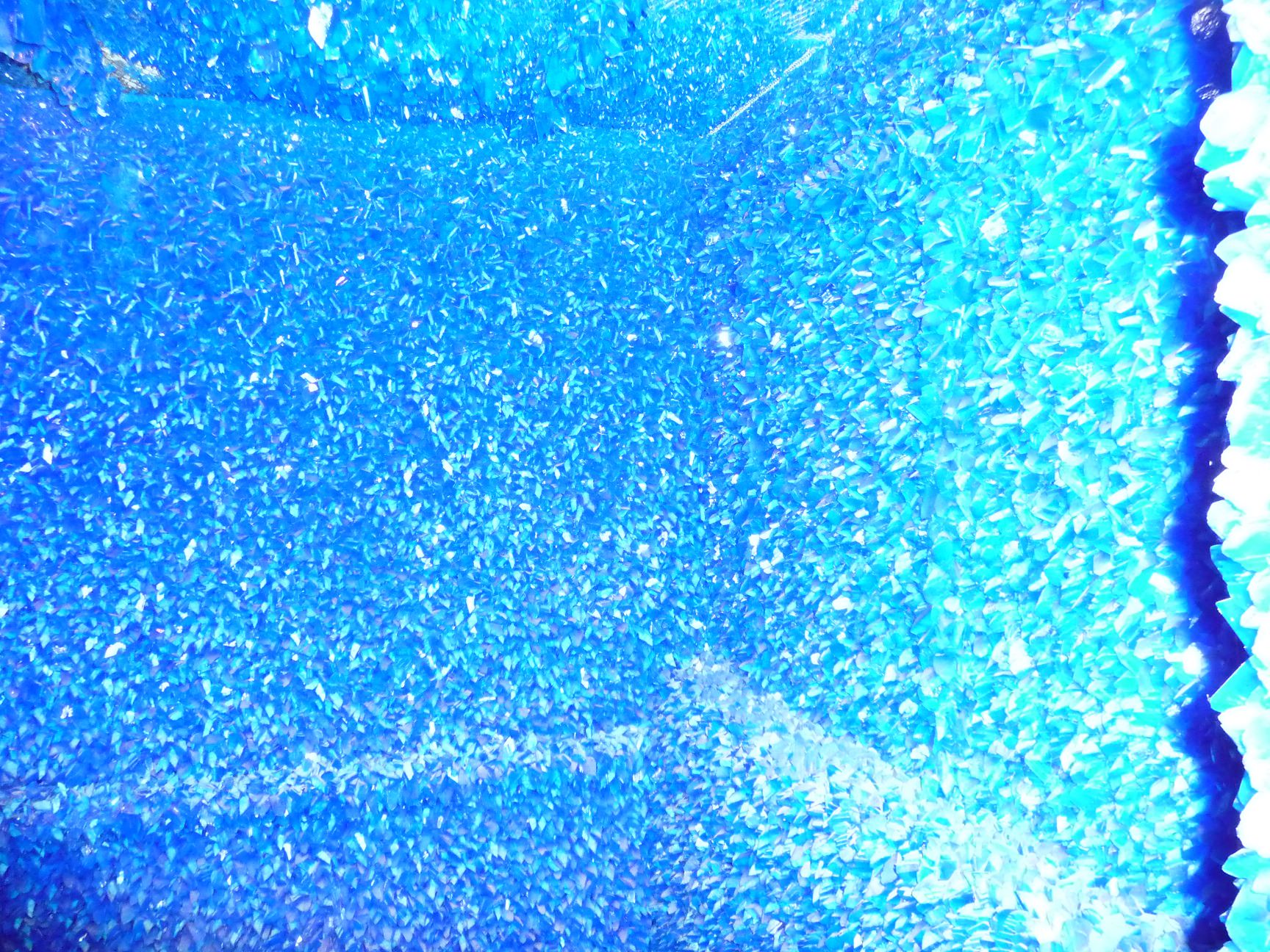
Copper sulphate crystals on walls
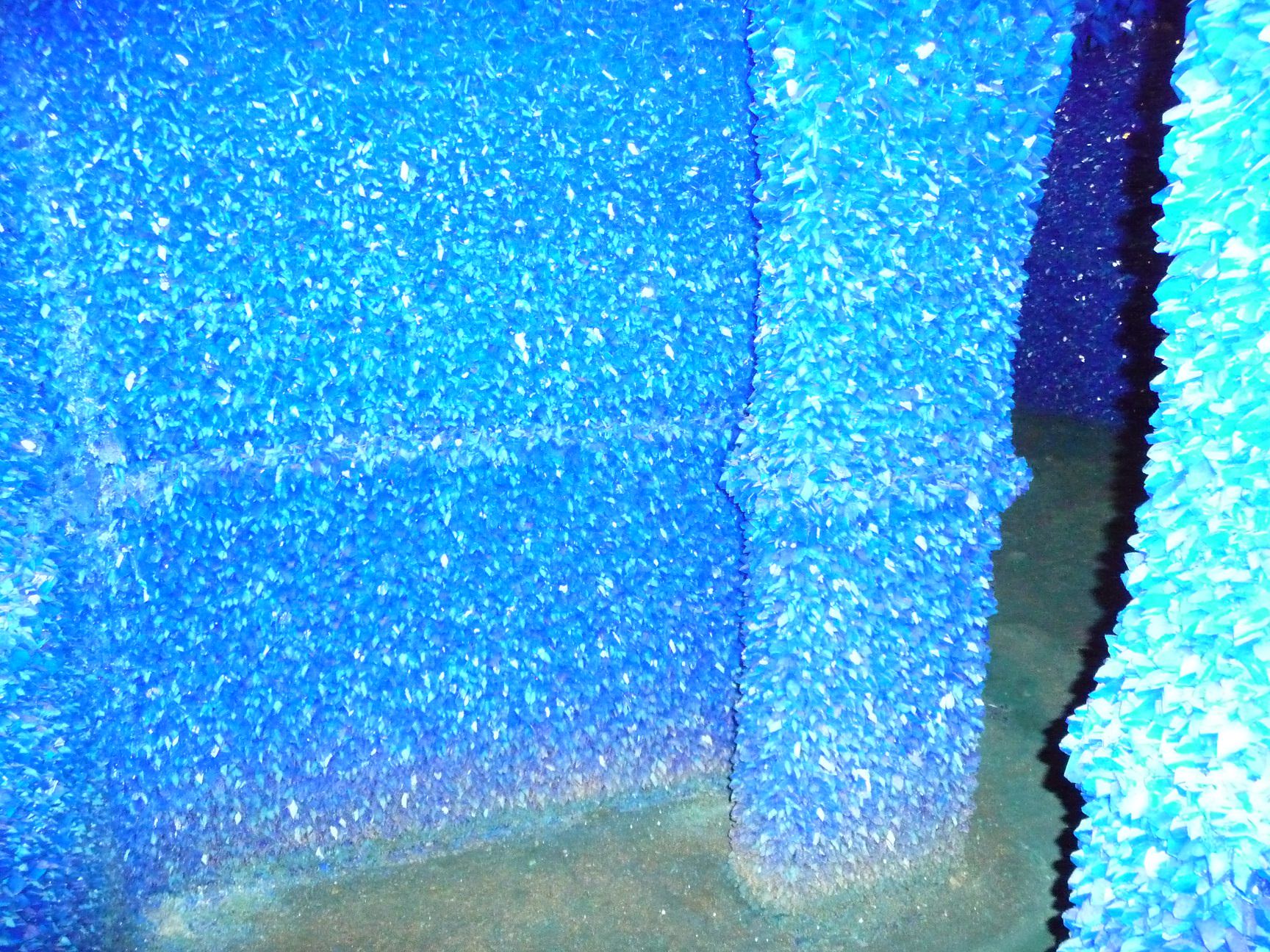
Copper sulphate crystals
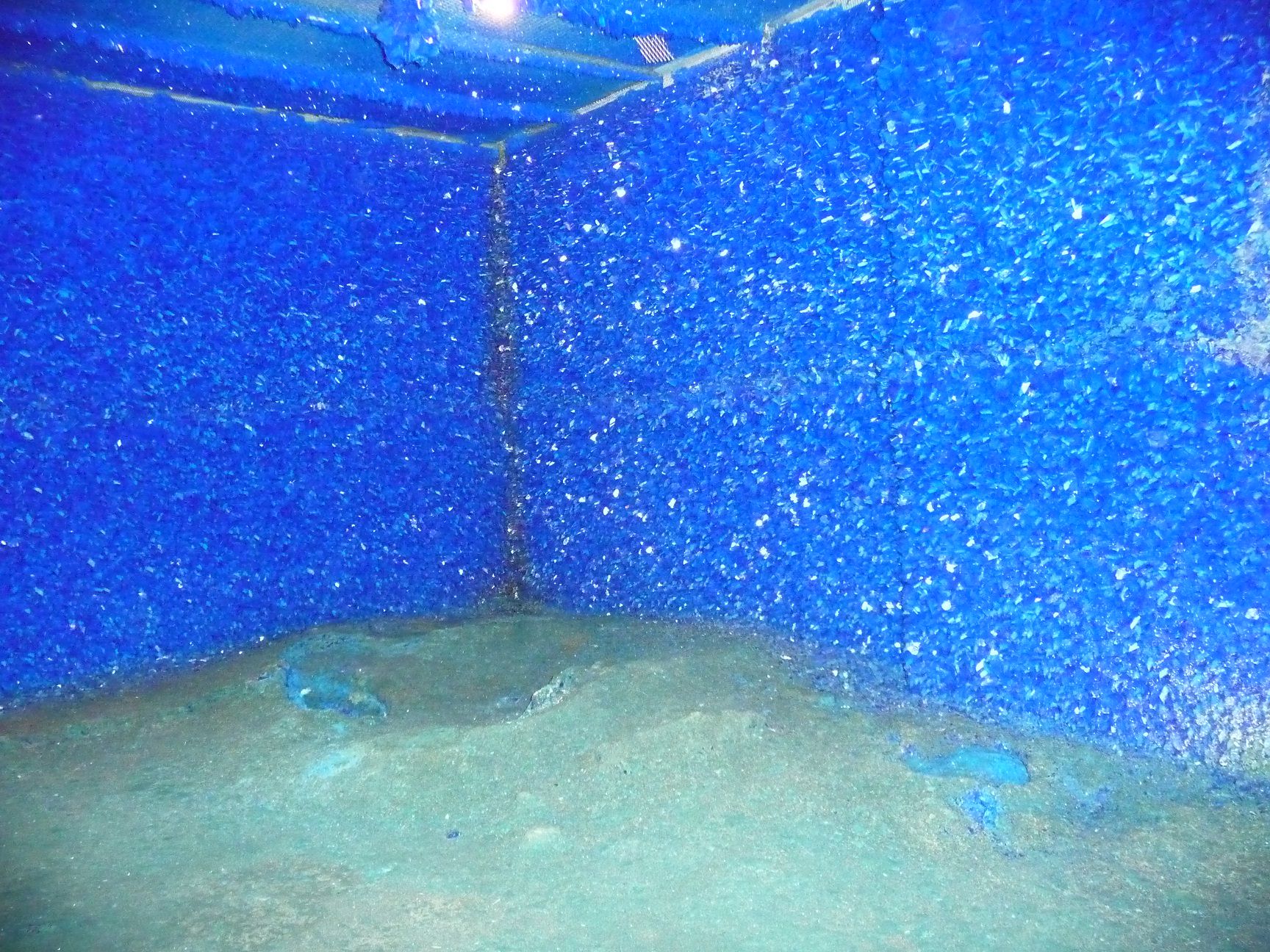
Flat living room
Copper sulphate is only moderately toxic when taken orally, however several fatal cases of copper sulphate poisoning have been reported in the literature. In these rare cases individuals have deliberately ingested gram quantities of copper sulphate. Ingestion of this chemical is often not toxic because vomiting is automatically triggered by its irritating effect on the digestive system.
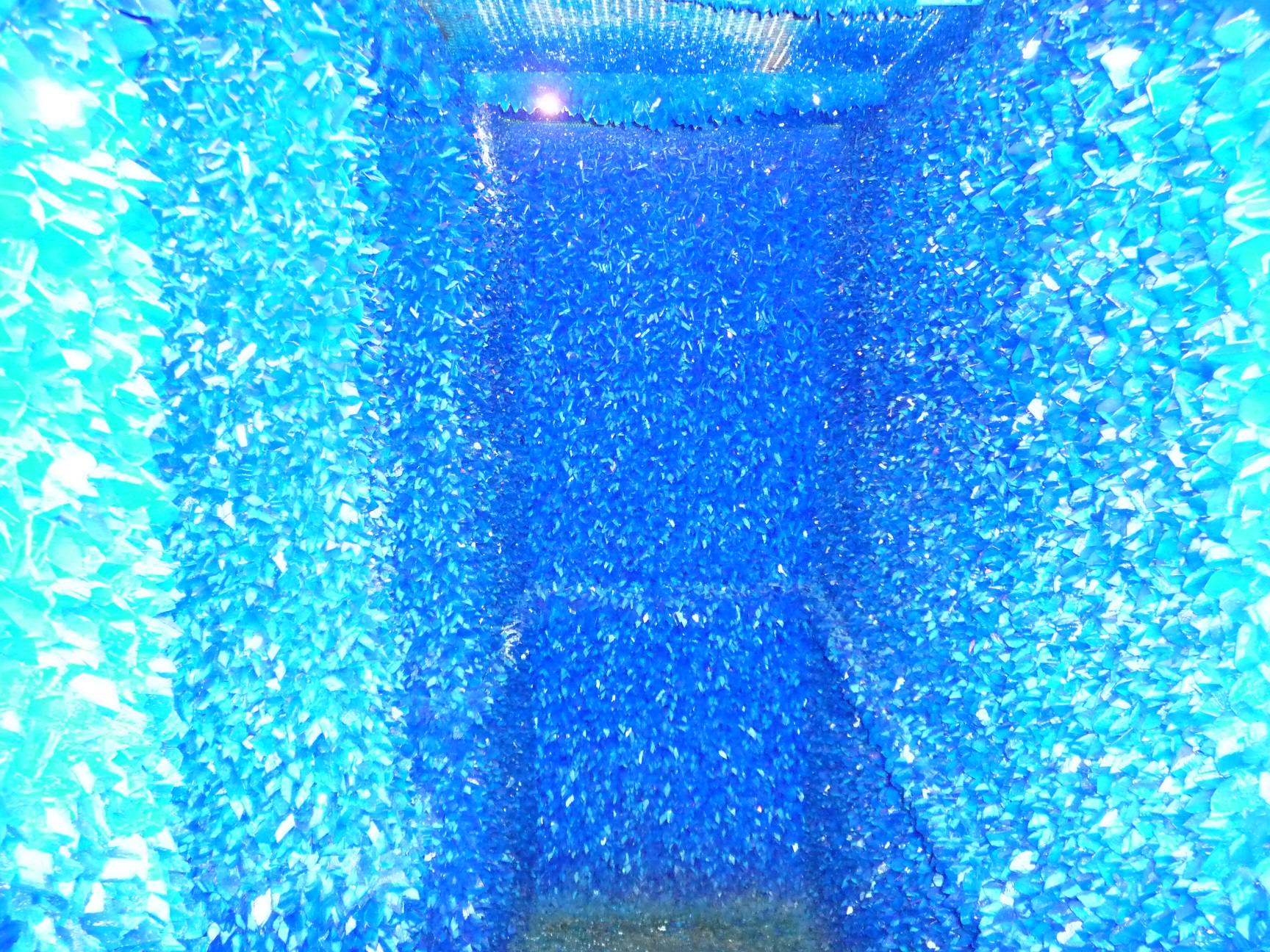
Corridor
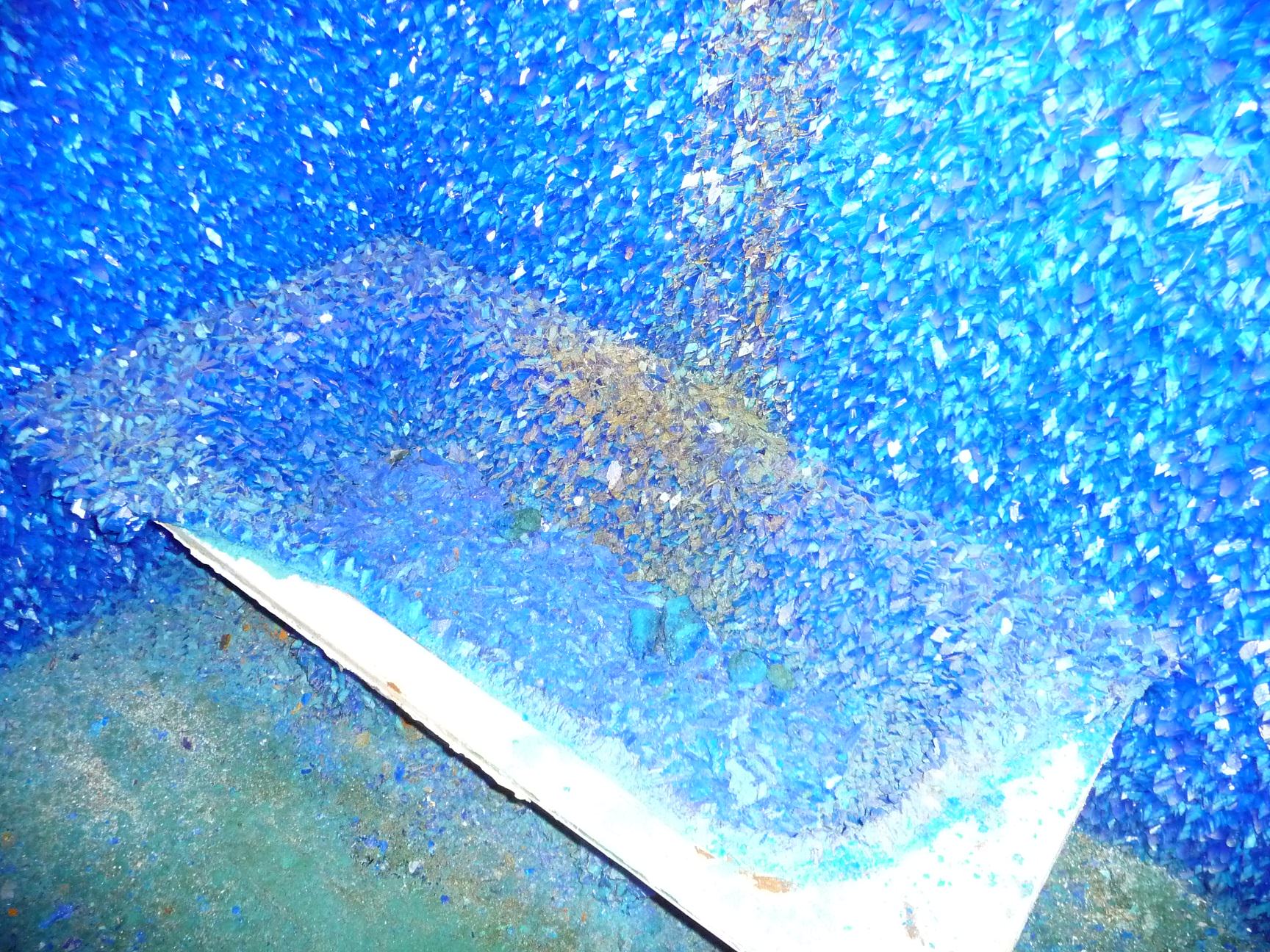
Bathroom
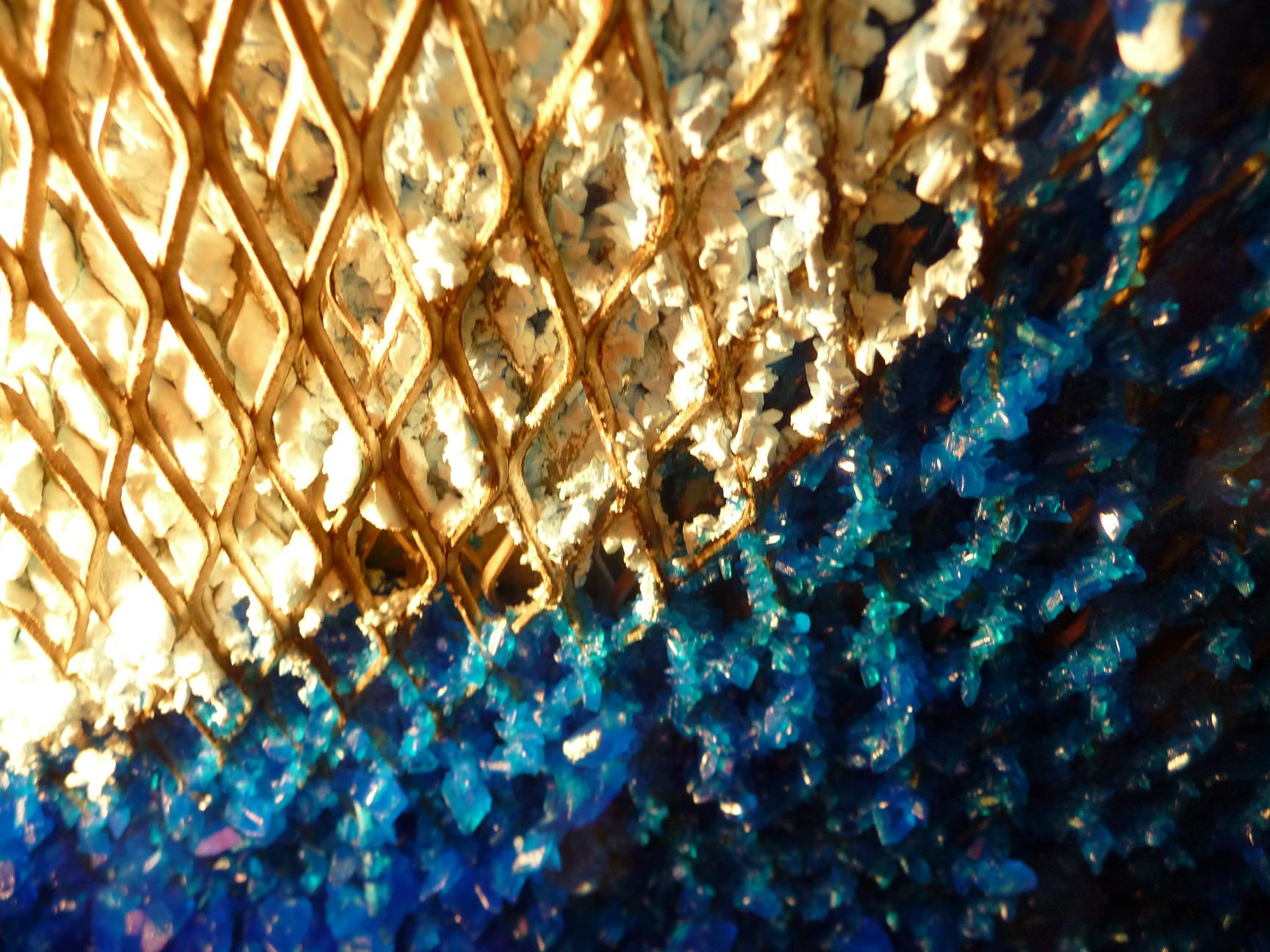
Partially de-hydrated Copper Sulphate around light fittings
Chronic exposures to copper sulphate through inhalation are rare but like with any other chemical compound can occur when large quantities of chemical are used often for long periods of time. The best know examples of occupational exposure to copper sulphate come from vine industry where the disease is know as “vineyard sprayer’s lungs”. (Pimentel and Marques, 1969; Villar, 1974; Pimentel and Menezes, 1975; Pimentel and Menezes, 1977; Stark, 1981; Plamenac et al, 1985). Vineyard workers use frequently large quantities of dissolved copper sulphate solution to treat grape plants from fungal diseases. Naturally, application of treatment agent by spraying exposes the workers to significant concentration of copper sulphate. Single exposures should not normally present much of a problem however in cases where the exposure was repeated and frequent (5-13 years) the workers have developed respiratory problems(Toxnet 1975) including dyspnoea, cough, wheeze, myalgia and malaise (Pimentel and Marques, 1969; Villar,1974; Pimentel and Menezes, 1975; Stark, 1981).
In this particular case the exposure of people working inside of the art piece is negligible. During the exposure evaluation no measurable quantities of copper sulphate dust were detected and thus employees or visitors do not expose themselves to copper sulfate dust.
By; Tomas Gabor


