
Are period buildings prone to mould?
Old, dusty and damp period buildings provide perfect conditions for mould growth. In such buildings mould can be found growing on wall surfaces, the ceiling and on interior decorations. The main reason for this is usually the deterioration of building materials used in the construction all those years ago.
Our next client owned a period building and had concerns regarding mould, so we were invited along and asked to carry out a building and mould investigation. The period building is a former Vicarage based in Barnstaple. The building is currently in use as a dental practice. The building consists on the ground floor of four dental surgeries, a waiting room, a reception area, a file room, an OPG room, a customers’ toilet, a staff kitchenette and a stock room. On the first floor there are four dental surgeries, two waiting rooms, an office, a decontamination room, an OPG room, and a staff toilet. Finally the second floor consists of a staff room and changing area.
The moisture mapping process
Our surveyor begun his investigation by working his way around the building, visually inspecting areas and moisture mapping with the assistance of a Hydromette HB30 moisture meter and a Tramax moisture encounter plus.
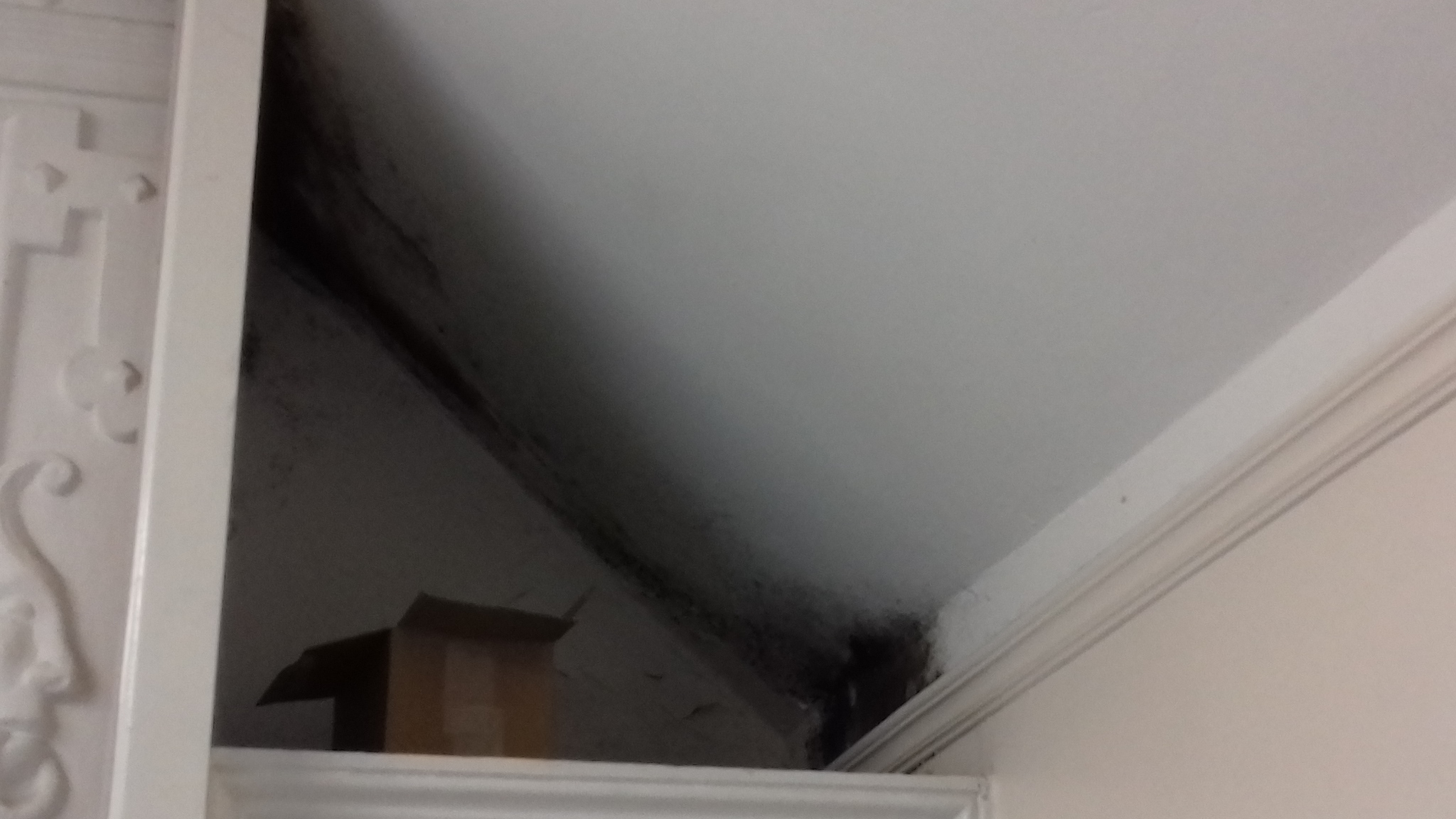
The first floor decontamination room was the first to be inspected. Here our surveyor found evidence of condensation mould (see above image) in the upper corner of the ceiling however the levels of moisture within this area were normal and there is no evidence of fungal contamination. Our surveyor believes that the root cause of this condensation mould is the condensation of water vapour onto the cold surface of the wall.
The store room was next on our list. Here there was evidence of water penetration from the roof. Although there was no evidence of fungal contamination in this room, there was elevated levels of moisture within the ceiling and plastering on the wall. The root cause of the water damage in this room is believed to be the water ingress through the roof structure. Unfortunately our surveyor was unable to access the roof in order to investigate further.
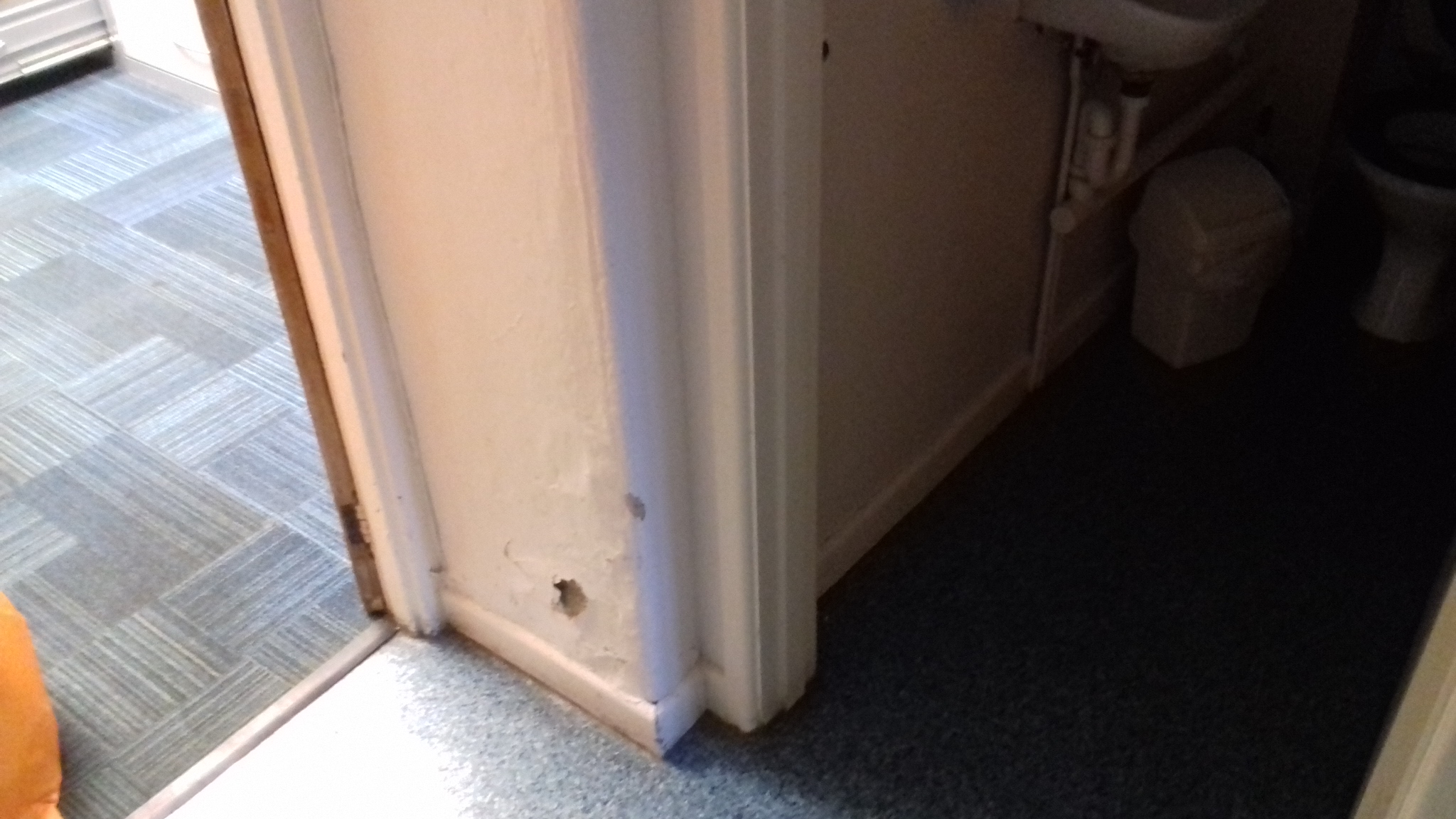
Back on the ground floor, there was evidence of rising damp along the bottom of the walls in the OPG room (see below image). However there was no visible damage to decorative finishes or evidence of fungal contamination in this room. It was a similar story when we inspected the kitchenette next door as there was again evidence of rising damp along the bottom of the wall near the entrance.
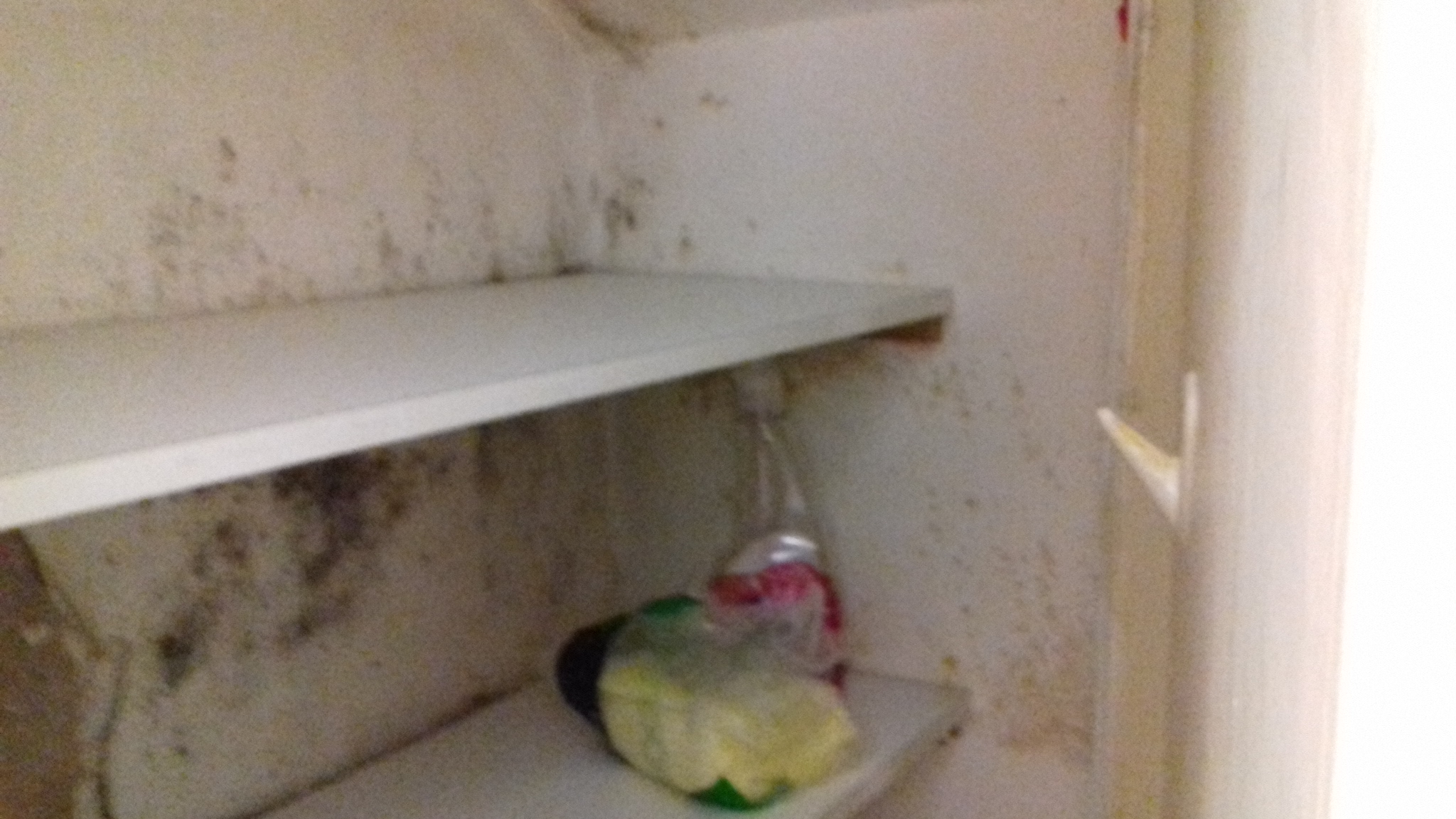
In the ground floor store room there was evidence of condensation mould along the bottom of the external walls. The extent of this mould contamination was approximately 2m2 however the moisture levels in this area were normal. In the storage cupboard in surgery 4 there was evidence of risking and penetrating damp to the back external walls and the moisture content of the floor was high. Some of the items stored in this area and the plywood storage unit were contaminated by light fungal growth and there was a strong musty odour.
In surgery 4 there was evidence of high moisture content in parts of the wooden flooring. The root cause of this appeared to be plant growth to the external wall of the building. There was also a small amount of fungal contamination in a corner cupboard and the root cause of this was condensation.
How to treat current mould contamination and prevent reoccurrence?
Our surveyor had several recommendations for our client, mainly being the removal of current mould contamination. The mould contamination in the decontamination room and the ground floor store room, should be removed and the walls should be insulated in order to prevent condensation and reoccurrence of fungal growth. The plant growth to the external wall behind surgery 4 should be removed and the affected wall should be repaired. The plaster in the cupboard has deteriorated significantly and should also be repaired. Also the mould contamination in this cupboard should be removed. Finally our surveyor recommended that the rising damp in the ground floor OPG and Kitchenette should be monitored and the walls to be redecorated if required.