
Crawlspace in a typical residential building is a relatively low or narrow space below the lower story of a building. It differs from a basement by its shallow depth which does not allow for a person to stand up. Crawl space is usually not accessible (not regularly) and is not meant for storage of materials. Crawlspaces are build because they are significantly cheaper than concrete slab foundations and also because they are more suitable in areas with high water table and persistent damp.
A typical crawlspace consists of perimeter and internal foundations walls, dirt floor between and typically timber floor above. It should have regularly spaces wents allowing for ventilation and may or may not have a vapour barrier floor to prevent moisture ingress from the soil. Unfortunately the vapour barrier element is mostly missing in traditional housing.
Even thought the crawl space is not strictly speaking a part of habitable area of the house it is certainly part of the building envelope. From the perspective of the indoor air the crawlspace needs to be considered as integral and possibly one of the most significant components of the house. The reason being that in the traditional housing the crawlspace is often connected with the main habitable area by series of small openings, usually between ground floor timber flooring. These openings allow the air from the crawlspace to enter the property sometimes at a significant rate.
Air flows from the crawlspace into the habitable areas due to the so called “stack effect”. Warm air inside the property naturally rises to upper floors of the property crating a pressure difference on the ground floor. This pressure difference equalised by sucking in the air from outside or below along the path of least resistance. With addition of highly insulated windows often the relative pressure difference can only be equalised by sucking in the air from the property crawlspace.

In respect to indoor air quality the crawl space air becomes a significant contributor of possible pollutants. The pollutants are usually limited to moulds and bacteria and microbial volatiles. Particular mater does not usually play a significant rope because crawlspace is essentially undisturbed area with very limited chance of dust being created. As this area is typically empty the only possible sources remaining are fungi, bacteria and other microscopic life forms.
Microbes only become a problems if significant moisture exists. For instance if the ground water level rises, after extended periods of precipitation or because of service failures such as burst drainage or sewage pipes. In the presence of water the microbial organisms naturally living in the soil do what they meant to do- live, multiply, compete with each other and in the process digest organic matter available. During all this processes a great myriad of chemical compounds are released by all sorts of microbes. These compounds commonly known as microbiological volatile organic compound (MVOC) are known to produce adverse health symptoms in sensitive individuals.

Various soil microbes

Various microscopic life form living in soil
To create indoor air quality problems the crawlspace does not have to be contaminated by visible moulds, just higher than normal amount of mould (fungi), bacteria and other microscopic life forms can generate enough biological volatiles to affect most sensitive individuals. These chemical compounds are not typically detectable by standard volatile sampling methods due to their extremely low concentrations.
The two main sources of moisture in the crawlspace are moisture released from the ground and moisture carried in by air circulation from the outside air. Well constructed and dry crawlspace should have relative humidity level below 60%. With humidity levels above 65% the amount of condensed moisture on surfaces makes mould growth a real possibility. If permanently damp conditions exist, such as patches of damp soil, localised pools of high microbial activity can exist without causing a visible effect on the timber structure of the floors.
Permanently damp crawlspaces can apart from mould, bacteria and microscopic life forms become attract by wood rotting fungi which can present a real structural problem and are also a significant indoor air pollutant.
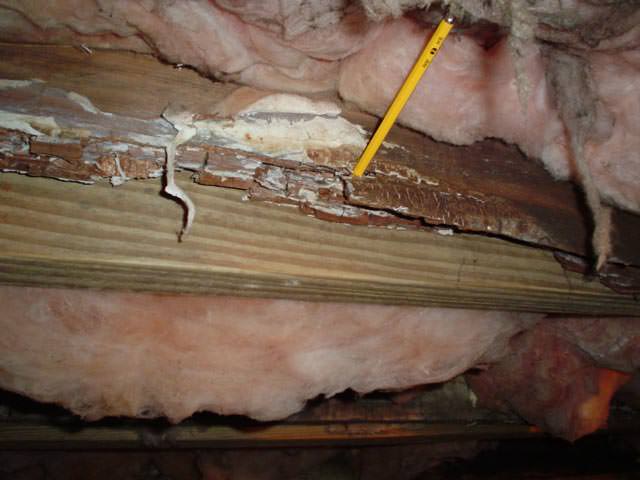
Dry rot in crawlspace timber joist
Today, building experts have a different prescription for eliminating crawl spaces based indoor air quality problems. The most practical solution is the prevention of water ingress into the crawlspace by installation of water resistant water barriers to the dirt floor and foundations walls. Some experts suggest that conditioning of the crawlspace by installation of heaters or de humidifiers might be the right solution in some situations.
By Tomas Gabor
Dangers of poor Indoor Air Quality
Indoor Air Quality (IAQ) referes to the air quality within and around buildings, especially as it releates to the health and discomfort of the occupants. Understanding IAQ is important to be able to control common pollutants indoors which can help reduce your risk of health effects.
Health effects from poor IAQ may be experienced soon after exposure or a few years down the line, this is why it is vital to tackle the issue as soon as you’re aware there is a problem.

Instantaneous Effects
Health effects may show up very shortly after being exposed or repeated exposures to a pollutant, the effects you may experience will include irritation to the eyes, nose, and throat, fatigue, dizziness, and headaches. These immediate effects are most commonly short-term and treatable. Most of the time the treatment is just removing the person’s exposure to the source of the pollutant if it can be identified, you may be able to use a test kit such as the Allergen or mould test kits to help identify the source. Sometimes after exposure to some indoor pollutants, symptoms of some diseases such as asthma may happen.
The likelihood of immediate effects from poor indoor air quality is dependent on numerous factors such as age, and preexisting health concerns. However, the wether a person reacts to a pollutant depends on the individual and their sensitivity to such exposures, which varies from person to person. Some people can become sensitised to biological or chemical pollutants after repeatedly or high level exposures.
Immediate IAQ effects can be similar to those from colds or other viral infections, so it can be difficult to determine if the effects are from poor IAQ or just a general viral infection. It is important to keep and eye on when and where the symptoms occur. If the symptoms fade after leaving the suspected area an effort should be made to identify the pollutant. Sysco Environmental can help identify any indoor air pollutants, for more information on this, explore our IAQ page.
Long-Term Effects
Some health effects can show up years after you have been exposed or after repeated periods of exposure. These effects are much scarier than the previous “cold symptoms” and can include respiratory diseases, heart disease, and cancer. It is important to try improve indoor air quality in your home or workplace even if symptoms are not noticeable straight away.

While pollutants that are found in indoor air can cause numerous harmful effects, there is a large amount of uncertainty about what concentration levels or periods of exposure are necessary to create specific health problems. People also react in different ways to indoor air pollutants, further research is vital to better understand which health effects occur after exposure to the average pollutant, and what concentration these may occur from.
Leading Causes to Poor Indoor Air Quality
Poor Indoor Air Quality sources that releases particles or gasses into the air are the primary cause of poor Indoor Air Quality. Lack of ventilation can increase Indoor Air pollutant levels due to no outdoor air to dilute emissions from indoor sources and by not carrying the indoor pollutants out of the building. High temperature and humidity levels can also increase concentrations of some pollutants such as biological contaminants (Mould).
Sources
There are a number of sources leading to poor Indoor Air Quality, these can include the following:
- Diesel Engines (fuel-burning appliances)
- Building materials and furnishings
- Cleaning products
- Heating and cooling systems (central heating) as well as humidification devices
- Excess moisture
- Biological Contaminants (Mould)
- Paint & VOC’s
- Tobacco products
The respective importance of any single source depends on how much of a given pollutant it produces and how hazardous those emissions are. Maintence is an important factor to IAQ, things like show old is the source and whether it’s been properly maintained. If addressed correctly, the appliance that may be the source can be controlled through adjustments. However, some sources, such as building materials, furnishings and products like air fresheners, can release pollutants more or less continuously and other sources through daily tasks and behaviours such as smoking, cleaning, redecorating, or doing hobbies, particularly types of art. (Eg- Nail technician, Model building and painting)
Polluatant contamination can linger in the air for long periods after some activities.
Poor Ventilation
Poor Ventilation means that very little outdoor air enters the building and pollutants can accumulate to levels that can pose a threat to health and comfort problems. Unless buildings are built with specific mechanical means of ventilation, those designed and constructed to minimize the amount of outdoor air that can seep in and out may have higher indoor air pollutant levels. As mentioned previously, it is important for a fresh airflow to enter the building to dilute the indoor pollutants.


