
Testing indoor air quality in a fire damaged factory
We were called to a factory with a history of fire damage, our client instructed us to carry out an Indoor air quality investigation. The purpose of the indoor air quality assessment was to evaluate the concentration of acidic mists in the air associated with fire damage to the clean room production facility using large quantities of inorganic acids.
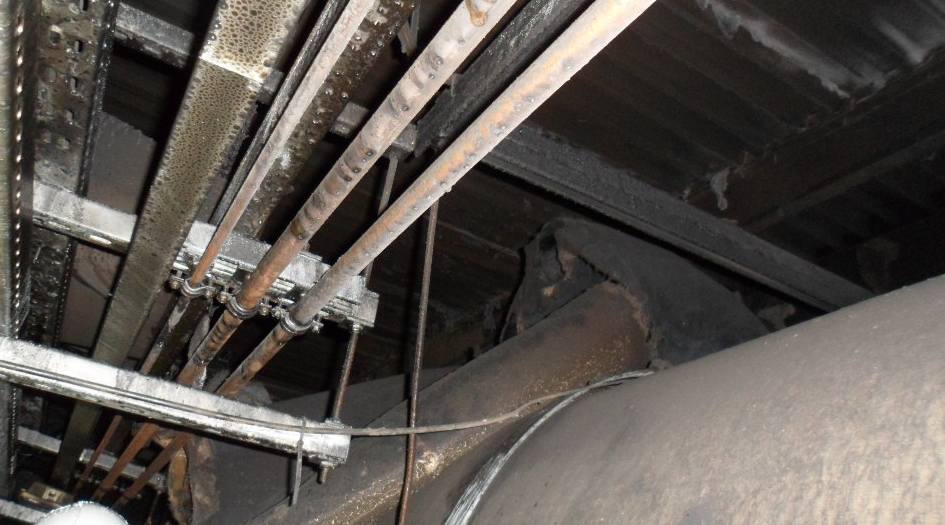
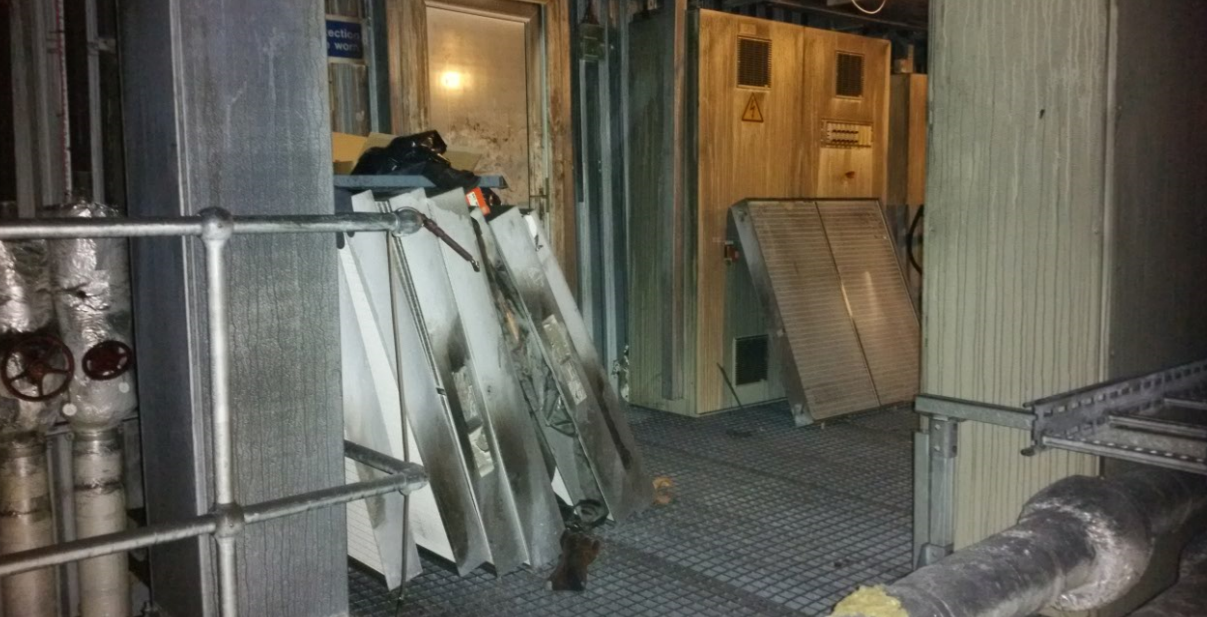
The ground floor of the affected factory consisted of welfare facilities and clean room production facilities. The production areas of the factory are separated into three main production rooms with a water management room at the back of the factory. A bulk chemical storage yard is located immediately adjacent to the factory, it is here that the site stores a number of inorganic acid and hydroxides. The fire is believed to have started in the chemical storage yard and then progressed through the water treatment facility and into the nearest clean room. As a result the while site is significantly contaminated by soot and hazardous chemical products were released during partial combustion of various chemicals, components and plastics.
Methodology for Indoor air quality testing
Static samples for chemical contaminants were collected from 16 locations throughout the site by our surveyor. All samples were collected in strict accordance with NIOSH 7903, Acids – Inorganics. Static samples were analysed for the presence of Hydrogen Chloride, Hydrogen Fluoride, Nitric acid and Sulphuric acid. The samples were analysed by an accredited laboratory and then our surveyor was able to use these results as base to provide our client with a full written report with suitable remediation measures.
What did air monitoring reveal?
Our Indoor air quality assessment revealed that the concentration of acid mists in the ambient air of the factory was low therefore employees working in the area are unlikely to be exposed to acid vapour above the workplace exposure limits (WELs). Our investigation also revealed that the use of respiratory protective equipment (RPE) for the control of exposure to acid mists is not necessary, however RPE should be used in order to control other airborne particulate contaminants. We recommend the use of respiratory protection equipment of at least FFP3 standard to control employees’ exposure to hazardous dusts including soot. The employees using RPE should be face fitted for it’s use, this can include disposable RPE. Finally we found that acid vapours were present in some of the tested areas which is indicative of the presence of contamination which gives rise to these vapours.

